Tubular film line
A tubular film line is a variation of the blown film process that produces film in a continuous tube, which is then collapsed and wound as flat tubing. This tubular film is ideal for making bags, liners, and sleeves because it eliminates the need for a side seam – the tube's natural edges are already sealed. The line typically includes a blown film extruder with a circular die, an air ring, a collapsing frame, nip rollers, and a winder that can handle lay-flat tubing. Unlike standard blown film that is slit and opened, tubular film lines often include a slitting section only if the customer needs sheets. The key advantage is material savings: no edge trim waste from slitting, and the bag's bottom can be heat-sealed directly across the tube. Tubular film lines are widely used for garbage bags, shopping bags, produce bags, and industrial liners.
The process on a tubular film line is similar to regular blown film but with emphasis on maintaining a stable bubble without excessive oscillation, because any bubble asymmetry translates into uneven tube lay-flat. Therefore, precise air ring control and internal bubble pressure are critical. The haul-off speed determines the film thickness, while the blow-up ratio sets the lay-flat width – which is roughly π times the die diameter divided by 2 (for standard BUR). Many tubular film lines incorporate in-line printing (flexographic) to add logos or text on the tube before winding. After winding, the tubes are either sold as rolls or sent to a bag making machine that heat-seals and cuts the bottom. Some lines feature a side-sealing station to create gusseted tubes. High-speed tubular film lines can operate at up to 150 m/min, producing thousands of meters per hour.
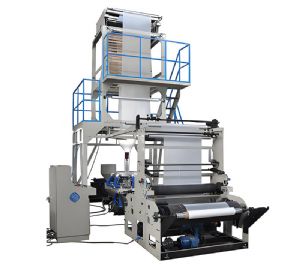
Blown Film Machine
Key specifications for a tubular film line include the die diameter (determines tube width), maximum BUR (affects film width range), lay-flat width (from 100 mm to over 3 m), and film thickness (10-200 µm). The line often includes a thickness gauge with a rotating scanner that measures across the tube's width to detect gauge bands. Automatic gauge control adjusts the die thermal bolts to maintain uniformity. The winder must be capable of handling delicate tubing without telescoping; center winders with tension control are preferred. For high-volume production, turret winders enable roll changes without stopping. The line also needs an edge trim granulator to recycle any trim if the line includes slitting for open film. Additionally, for food-grade applications, the line must meet FDA or EU regulations with appropriate material certification and cleanability.
Maintenance of a tubular film line focuses on the die and air ring cleanliness, because any blockage causes streaks in the tubing. Nip roller surfaces must be smooth to avoid marking the film. The collapsed frame and guide rollers need alignment to prevent folding wrinkles. Regular calibration of the thickness gauge ensures accurate measurement. Operators must monitor bubble stability and adjust air flow or cooling as resin batches change. A tubular film line is energy-intensive; using high-efficiency blowers and insulated barrels reduces operating costs. With the rising demand for sustainable packaging, many lines now process biodegradable resins and recycled content, requiring screw modifications for higher melt flow. Tubular film lines are a cost-effective solution for bag manufacturers, offering high output with minimal waste. The market trend is toward multi-layer tubular films that combine strength, barrier, and sealability in a single tube, often produced by co-extrusion dies. Overall, the tubular film line is an essential asset for the packaging industry, enabling efficient production of countless everyday film products.
