Screw feeding and blending ratio control
Screw feeding and blending ratio control is the foundation of consistent film quality, as it determines the precise composition of the polymer melt entering the extruder. Modern lines use gravimetric blenders that weigh each component (virgin resin, regrind, masterbatches, and additives) in real time, achieving accuracy within ±0.1–0.5%. The blender feeds the hopper via a screw conveyor or vacuum loader, with the screw speed adjusted to maintain a constant fill level. The blending ratio must be set based on the product recipe—for example, a typical shopping bag might use 70% LLDPE, 20% HDPE, and 10% color masterbatch. The control system monitors the actual feed rates and automatically corrects any deviations to ensure the target ratio is maintained. For multi-layer lines, each extruder has its own blending station, with different ratios for each layer (e.g., core layer with regrind, skin layers with pure resin). Proper blending prevents segregation of additives and ensures uniform color, mechanical properties, and processability. Operators must calibrate the blenders regularly using sample collection and weight verification. The feed rate must match the extruder's output to avoid starving or flooding the screw. Inline melt flow index (MFI) sensors can provide feedback for automatic ratio adjustment. Poor blending leads to streaks, gels, and inconsistent film properties. The system also includes metal detectors and magnets to remove ferrous contaminants before they damage the screw or die. Overall, precise feeding and blending control directly impacts material cost, product quality, and process stability.
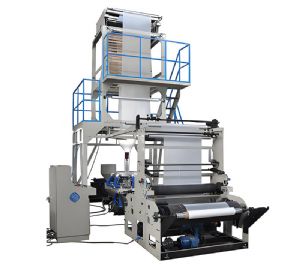
Blown Film Machine
Screw feeding and blending ratio control is the foundation of consistent film quality, as it determines the precise composition of the polymer melt entering the extruder. Modern lines use gravimetric blenders that weigh each component (virgin resin, regrind, masterbatches, and additives) in real time, achieving accuracy within ±0.1–0.5%. The blender feeds the hopper via a screw conveyor or vacuum loader, with the screw speed adjusted to maintain a constant fill level. The blending ratio must be set based on the product recipe—for example, a typical shopping bag might use 70% LLDPE, 20% HDPE, and 10% color masterbatch. The control system monitors the actual feed rates and automatically corrects any deviations to ensure the target ratio is maintained. For multi-layer lines, each extruder has its own blending station, with different ratios for each layer (e.g., core layer with regrind, skin layers with pure resin). Proper blending prevents segregation of additives and ensures uniform color, mechanical properties, and processability. Operators must calibrate the blenders regularly using sample collection and weight verification. The feed rate must match the extruder's output to avoid starving or flooding the screw. Inline melt flow index (MFI) sensors can provide feedback for automatic ratio adjustment. Poor blending leads to streaks, gels, and inconsistent film properties. The system also includes metal detectors and magnets to remove ferrous contaminants before they damage the screw or die. Overall, precise feeding and blending control directly impacts material cost, product quality, and process stability.
Управление подачей и соотношением смешивания в шнеке: Управление подачей и соотношением смешивания в шнеке является основой стабильного качества плёнки, поскольку определяет точный состав полимерного расплава, поступающего в экструдер. Современные линии используют гравиметрические смесители, которые взвешивают каждый компонент (первичную смолу, регранулят, суперконцентраты и добавки) в реальном времени, достигая точности в пределах ±0,1–0,5%. Смеситель подаёт материал в бункер через шнековый конвейер или вакуумный загрузчик, при этом скорость шнека регулируется для поддержания постоянного уровня заполнения. Соотношение смешивания должно быть установлено в соответствии с рецептурой продукта — например, типичный хозяйственный мешок может использовать 70% ЛПЭНП, 20% ПЭВП и 10% цветного суперконцентрата. Система управления контролирует фактические скорости подачи и автоматически корректирует отклонения для поддержания целевого соотношения. Для многослойных линий каждый экструдер имеет свою станцию смешивания с различными соотношениями для каждого слоя (например, сердечный слой с регранулятом, наружные слои с чистой смолой). Правильное смешивание предотвращает сегрегацию добавок и обеспечивает равномерный цвет, механические свойства и технологичность. Операторы должны регулярно калибровать смесители с помощью отбора проб и проверки веса. Скорость подачи должна соответствовать производительности экструдера во избежание голодания или переполнения шнека. Встроенные датчики индекса расплава (MFI) могут обеспечивать обратную связь для автоматической корректировки соотношения. Плохое смешивание приводит к полосам, гелям и нестабильным свойствам плёнки. Система также включает металлодетекторы и магниты для удаления ферромагнитных загрязнений до того, как они повредят винт или головку. В целом, точный контроль подачи и смешивания напрямую влияет на стоимость материалов, качество продукции и стабильность процесса.
Controle de alimentação e proporção de mistura do parafuso: O controle de alimentação e proporção de mistura do parafuso é a base da qualidade consistente do filme, pois determina a composição precisa do fundido de polímero que entra na extrusora. Linhas modernas usam misturadores gravimétricos que pesam cada componente (resina virgem, moído, masterbatches e aditivos) em tempo real, alcançando precisão dentro de ±0,1–0,5%. O misturador alimenta a tremonha através de um transportador de parafuso ou carregador a vácuo, com a velocidade do parafuso ajustada para manter um nível de enchimento constante. A proporção de mistura deve ser definida com base na receita do produto—por exemplo, uma sacola de compras típica pode usar 70% de LLDPE, 20% de HDPE e 10% de masterbatch de cor. O sistema de controle monitora as taxas de alimentação reais e corrige automaticamente quaisquer desvios para garantir que a proporção alvo seja mantida. Para linhas multicamadas, cada extrusora tem sua própria estação de mistura, com proporções diferentes para cada camada (ex.: camada central com moído, camadas externas com resina pura). A mistura adequada evita a segregação de aditivos e garante cor uniforme, propriedades mecânicas e processabilidade. Os operadores devem calibrar os misturadores regularmente usando coleta de amostras e verificação de peso. A taxa de alimentação deve corresponder à produção da extrusora para evitar falta ou excesso de alimentação do parafuso. Sensores de índice de fluidez (MFI) em linha podem fornecer feedback para ajuste automático da proporção. A mistura inadequada leva a estrias, géis e propriedades inconsistentes do filme. O sistema também inclui detectores de metais e ímãs para remover contaminantes ferrosos antes que danifiquem o parafuso ou a matriz. No geral, o controle preciso de alimentação e mistura impacta diretamente o custo do material, a qualidade do produto e a estabilidade do processo.
Ruuvin syöttö ja seossuhteen hallinta: Ruuvin syöttö ja seossuhteen hallinta on perusta tasaiselle kalvon laadulle, sillä se määrää ekstruuderiin menevän polymeerisulan tarkan koostumuksen. Nykyaikaisissa linjoissa käytetään gravimetrisiä sekoittimia, jotka punnitsevat jokaisen komponentin (neitsythartsi, jauhettu, masterbatches ja lisäaineet) reaaliajassa saavuttaen ±0,1–0,5 %:n tarkkuuden. Sekoitin syöttää suppiloon ruuvikuljettimella tai tyhjiölataajalla, ja ruuvin nopeutta säädetään pitämään täyttötaso vakiona. Seossuhde on asetettava tuotereseptin perusteella – esimerkiksi tyypillinen ostoskassi voi käyttää 70 % LLDPE:tä, 20 % HDPE:tä ja 10 % värimasterbatchia. Ohjausjärjestelmä valvoo todellisia syöttönopeuksia ja korjaa automaattisesti poikkeamat varmistaakseen tavoitesuhteen säilymisen. Monikerroslinjoilla jokaisella ekstruuderilla on oma sekoitusasemansa eri suhteilla kullekin kerrokselle (esim. ydinkerros jauheella, pintakerrokset puhtaalla hartsilla). Oikea sekoitus estää lisäaineiden erottumisen ja varmistaa tasaisen värin, mekaaniset ominaisuudet ja prosessoitavuuden. Käyttäjien on kalibroitava sekoittimet säännöllisesti näytteenoton ja painon tarkistuksen avulla. Syöttönopeuden on vastattava ekstruuderin tuotantoa ruuvin nälkiintymisen tai tulvimisen välttämiseksi. Linjassa olevat sulaindeksi (MFI) -anturit voivat antaa takaisinkytkentää automaattista suhteen säätöä varten. Huono sekoitus johtaa juovaisuuteen, geeliytymiseen ja epätasaisiin kalvon ominaisuuksiin. Järjestelmä sisältää myös metallinilmaisimet ja magneetit ferromagneettisten epäpuhtauksien poistamiseksi ennen kuin ne vahingoittavat ruuvia tai suulaketta. Kaiken kaikkiaan tarkka syöttö- ja sekoitusohjaus vaikuttaa suoraan materiaalikustannuksiin, tuotteen laatuun ja prosessin vakauteen.
