Screen changer replacement interval
The screen changer (or screen pack) in a blown film extruder is a critical filtration device that removes contaminants, gels, and carbonized particles from the melt stream. The replacement interval – how often the screen pack is changed – depends on several factors: the type of resin, the level of contamination (especially with recycled material), the screen mesh size, the line output, and the acceptable pressure drop. In general, the screen pack should be changed when the melt pressure upstream of the screen rises by a certain amount (e.g., 50-100 bar above the baseline) because the screen is clogging. Running with a high pressure drop increases melt temperature (due to viscous heating) and can cause degradation, surging, or even screen rupture. Conversely, changing the screen too frequently wastes material (the polymer in the screen) and costs labor. Therefore, the goal is to find the optimal interval that maximizes filter life while maintaining melt quality and process stability. For virgin resin with low contamination, a screen pack might last 24-72 hours of operation. For highly filled or recycled resins, the interval may be as short as 2-8 hours. Some lines use a continuous screen changer (e.g., belt or rotary type) that allows changing without stopping, eliminating the interval issue. Others use manual or hydraulic slide-plate changers that require a shutdown for change.
The primary indicator for screen change is the pressure increase. Most extruders have a pressure transducer before the screen changer. Monitor the pressure trend: when it rises 30-50% above the initial clean pressure, it's time to change. For example, if the clean pressure is 100 bar, schedule a change at 140-150 bar. However, the maximum allowable pressure is limited by the equipment rating – typically 350-500 bar. Never exceed that. Also, note the melt temperature – a significant rise (5-10°C) indicates excessive shear due to high pressure, which is a sign of clogging. Another method is to monitor the output stability – if the screw speed needs to increase to maintain output, the screen is clogging. Some lines have a pressure-based automatic alarm that alerts operators. The replacement interval can be estimated by tracking the total kilograms of polymer processed per screen pack – for example, 5000 kg per change for clean resin, 1000 kg for recycled. Keep a log of each change, noting the pressure at change, the hours run, and the material processed. This data helps refine the interval for each product. For multi-layer lines, each extruder has its own screen changer; the interval may differ per layer because of different resins.
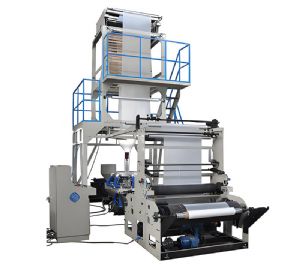
Blown Film Machine
Factors affecting interval: screen mesh size – finer meshes (e.g., 120-200 mesh) clog faster; use coarse meshes (40-80) for less critical films. Resin type – high filler content (e.g., CaCO3) accelerates clogging; recycled resins with particles also. Extruder output – higher throughput pushes more contaminants onto the screen, shortening interval. Temperature – higher temperature lowers viscosity, reducing pressure drop for the same clogging, but also may cause more degradation, increasing gels. The design of the screen changer – a large surface area (e.g., with a candle filter) provides longer life. The use of a pre-filter (e.g., a strainer before the extruder) can extend the screen changer's life. To maximize interval, ensure the resin is clean (use a good supplier), pre-dry hygroscopic resins to prevent moisture-related gels. Also, use a purging compound regularly to clean the screw and die, reducing downstream contaminants. When changing the screen, always have a clean pack ready to minimize downtime. For manual screen changers, the changeover time should be less than 5 minutes to avoid melt degradation. Pre-heat the new screen pack to operating temperature to avoid thermal shock. After change, the pressure will drop; adjust the screw speed if needed. Then monitor pressure rise to determine when the next change is due.
Economic optimization: the cost of screen packs includes the material (stainless steel mesh, filter media), the lost polymer during change (if purging), and labor. A longer interval reduces these costs but may risk film defects (gels, black specks) if the screen is too clogged. Therefore, set an interval that ensures film quality. For high-quality food packaging, change earlier (e.g., at 30% pressure rise) to minimize gel risk. For commodity films, a 40-50% rise is acceptable. Some plants have a two-level strategy: change at 40% rise for most products, and at 30% for critical ones. Also, use a duplex screen changer (two screens) to allow online change without stopping – this eliminates downtime but requires careful switching. In summary, the screen changer replacement interval is not fixed; it should be dynamically determined by pressure monitoring and process requirements. Regular data logging and analysis will reveal the optimal interval for each resin and application, balancing quality and cost. Training operators to change screens promptly and correctly is essential for consistent production.
