Plastic extrusion machinery
Plastic extrusion machinery is a broad category that includes all equipment used to melt and shape thermoplastic materials into continuous profiles. For blown film, the machinery specifically involves single-screw extruders, circular dies, and air rings. However, the term also encompasses twin-screw extruders (for compounding and mixing), cast film lines (with flat die and chill roll), pipe extrusion lines, profile extrusion lines, and sheet extrusion lines. Each type shares common principles – feeding, melting, pumping, and shaping – but differs in die design, cooling method, and downstream take-off. Blown film machinery is distinguished by its bubble-forming capability, which provides biaxial orientation. In contrast, cast film machinery uses a flat die and a polished chill roll to produce high-clarity film with uniaxial orientation. Pipe extrusion machinery uses annular dies with vacuum sizing tanks to form rigid pipes. Understanding the full spectrum helps manufacturers choose appropriate equipment for their product portfolio.
Key components common to most plastic extrusion machinery include the extruder (screw and barrel), heating/cooling systems, die or tooling, cooling section, puller/haul-off, and cutter or winder. For blown film, the cooling section is the air ring and bubble; for pipe, it's a water bath or spray tank; for sheet, it's a three-roll stack. The screw design varies: single-screw with different geometries (barrier, mixing, vented) for film and pipe; twin-screw (co-rotating or counter-rotating) for compounding and profile. The machinery's capacity is rated by throughput (kg/h) and product dimensions (width or diameter). Modern extrusion machinery often features modular construction, allowing upgrades like additional heating zones or advanced control systems. Automation levels range from manual to fully automatic with integrated quality control. Suppliers offer customized solutions based on material (e.g., PVC, PE, PP, PA) and final application requirements.
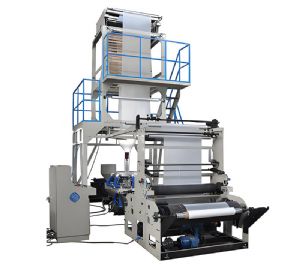
Blown Film Machine
When selecting plastic extrusion machinery, critical parameters include screw diameter and L/D ratio, motor power, barrel material (nitrided or bimetallic), and heating capacity. For blown film, die diameter and air ring design are paramount; for cast film, the chill roll surface finish and cooling capacity. Auxiliary equipment such as melt pumps, screen changers, and gravimetric feeders are optional but recommended for high precision. Also consider the control system – whether it supports recipe management and data logging. Maintenance requirements differ: single-screw extruders are simpler and easier to maintain than twin-screw. Machine footprint and utility consumption (electricity, water, air) must be factored into plant layout. Many manufacturers provide turnkey lines including installation and training. Price ranges vary widely: a basic single-screw blown film line may cost $50,000, while a multi-layer high-speed line can exceed $1 million. Overall, plastic extrusion machinery is the backbone of the plastics converting industry, enabling production of countless everyday products.
In the blown film sector, plastic extrusion machinery has evolved to handle increasingly complex multi-layer structures and higher outputs. Innovations include oscillating haul-offs to spread gauge variations, automatic die gap adjustment, and artificial intelligence for process optimization. Machinery manufacturers now focus on energy efficiency – using permanent magnet motors, insulated barrels, and waste heat recovery. Sustainability drives the development of machinery that can process higher proportions of post-consumer recycled content without sacrificing film quality. This requires robust filtration and degassing systems. The machinery also adapts to new biopolymers (PLA, PBAT) which have different melt rheology. Therefore, when investing in plastic extrusion machinery, it is wise to consider future material trends and flexibility to change products. Collaboration with machinery suppliers during the design phase ensures that the equipment meets current and future needs. Regular upgrades and retrofits keep the machinery competitive. Ultimately, the right plastic extrusion machinery enables manufacturers to produce high-quality products efficiently, reduce scrap, and respond to market demands rapidly.
