Packaging film extrusion line
A packaging film extrusion line is a blown film system dedicated to producing films for flexible packaging applications, ranging from food wraps and pouches to industrial bags and shrink sleeves. These lines are typically multi-layer (3, 5, or 7 layers) to provide the required combination of sealability, barrier, strength, and optical properties. The line includes a gravimetric blending system for precise additive dosing, an extruder (often with barrier screw), a co-extrusion die, a cooling system (air ring and optional IBC), a thickness gauge with AGC, a corona treater for printability, edge trim recycling, and a high-quality winder. The films must meet strict regulatory standards (FDA, EU) for food contact, so the materials used are often virgin and certified. The line speed is optimized for the specific film structure; thin films for bags may run at 150 m/min, while barrier films for pouches may run at 80 m/min. The output capacity is matched to the converter's downstream converting equipment (printing, slitting, bag-making).
The design of a packaging film extrusion line emphasizes consistent quality and low defect rates. The extruder screws are tailored to the resin blend – for PE-based packaging, a general-purpose barrier screw is common. The die is designed for precise layer distribution; for barrier films, tie layers are included. The cooling system must provide uniform cooling to achieve high clarity and flatness. The thickness gauge is usually a high-speed scanning beta or NIR type, with AGC that adjusts die bolts to keep thickness within ±3%. The corona treater is essential for printing and lamination. The winder must produce rolls with excellent lay-flat and no telescoping. The line also includes a quality control station where samples are tested for tensile, tear, seal strength, and oxygen transmission (for barrier films). The control system stores recipes for each film type, enabling quick changeovers. Packaging films are often printed and laminated in-line, so the extrusion line may be integrated with a flexo printer or laminator.
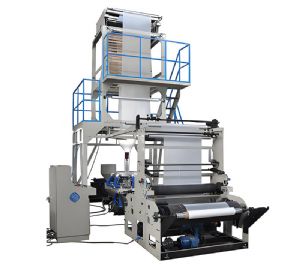
Blown Film Machine
Key applications and materials: for fresh produce bags – LDPE/LLDPE blends with good clarity and breathability; for frozen food pouches – LLDPE with high impact strength; for cheese and meat packaging – 5-layer with EVOH barrier; for shrink films – LDPE/LLDPE with high clarity and moderate shrink; for stand-up pouches – multi-layer with PA for puncture resistance. The line must handle a wide range of thicknesses (20-150 µm) and widths (200-3000 mm). The material handling includes dryers for hygroscopic resins like PA and EVOH. The line often includes a reclaim system for edge trim, which is fed back to the extruder to reduce waste. The maintenance schedule includes regular cleaning of the die and air ring, calibration of gauges, and inspection of the screw. The line's efficiency is measured by uptime, scrap rate, and energy consumption. Many packaging lines now incorporate sensors for real-time defect detection (pinholes, gels) using cameras or laser systems. The operator must be trained to adjust process parameters for different resins and film structures.
Market trends: sustainability is driving the use of mono-material packaging (all PE or all PP) with high barrier coatings instead of multi-layer laminates, simplifying recycling. This requires packaging film extrusion lines that can process high-performance PE grades with enhanced barrier properties. There is also growing demand for films with higher recycled content, which may require additional filtration and degassing. The line's flexibility to handle biodegradable resins (PLA, PBAT) is becoming a selling point. The cost of a packaging film extrusion line varies widely – from $200k for a basic 3-layer line to over $2M for a high-speed 7-layer barrier line. Converters often start with a 3-layer line and upgrade as they gain market share. The line's location should be near the converting plant to minimize logistics. Overall, the packaging film extrusion line is the heart of the flexible packaging industry, enabling the production of the countless films that protect and preserve food and goods. Its design and operation require a deep understanding of materials, processes, and end-user needs, making it a specialized but rewarding investment.
