Output capacity (kg/h)
Output capacity, measured in kilograms per hour (kg/h), is the rate at which a blown film line produces finished film, and it is a primary measure of productivity. The output is determined by the extruder's screw diameter, screw speed, material density, and melt pumping efficiency. For a given extruder, the theoretical output can be estimated from the screw's displacement volume per revolution multiplied by screw RPM and material density, but actual throughput is lower due to backflow, leakage, and melt slip. Typical blown film extruders range from 50 kg/h for small 45 mm screws to over 1000 kg/h for 200 mm high-output screws. However, the line's overall output is also limited by downstream components – the cooling capacity (air ring and IBC), the haul-off speed, and the winder speed. If the extruder produces more melt than the cooling system can handle, the bubble will not solidify properly, leading to gauge variations or collapse. Therefore, output capacity must be balanced across the entire line.
To calculate output capacity in practice, operators measure the weight of film produced over a known time – e.g., weigh a full roll and divide by the production time. Alternatively, the extruder's screw speed and melt density can be used for an estimate, but this requires correction for efficiency (typically 70-90%). The output also depends on the resin type – LDPE and LLDPE have different melt densities and flow behavior. Higher melt temperature reduces viscosity and can increase output but may cause degradation. The screw design – barrier screws, mixing sections, and grooved feed zones – significantly improves output by reducing melt temperature and increasing solids conveying. Many modern lines use melt pumps (gear pumps) to boost output and decouple pressure from screw speed, allowing the extruder to run at optimal RPM for maximum throughput while the melt pump ensures steady flow to the die. This can increase output by 10-20% compared to direct extrusion.
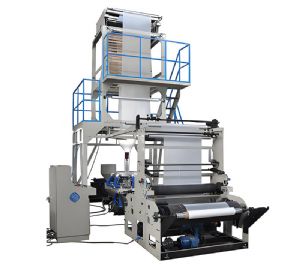
Blown Film Machine
Key factors affecting output capacity include screw diameter (larger screws have higher theoretical output), L/D ratio (longer screws allow better melting and higher output), motor power (must provide sufficient torque at high screw speeds), and the cooling system's ability to remove heat. For high-output lines, intensive cooling is required – IBC systems can increase output by 20-30% by enhancing internal cooling. The die diameter also plays a role: a larger die can handle higher melt flow without excessive pressure drop. Screen changers must have adequate surface area to avoid backpressure buildup that reduces output. The line speed and film thickness are inversely related to output: for a given output, higher speed yields thinner film; to produce thick film at high output, you need a larger extruder. Additionally, the material's melt flow index (MFI) affects output – higher MFI (lower viscosity) allows higher throughput for the same screw design, but may reduce bubble stability. Additives like fillers (calcium carbonate) increase density and thus kg/h for the same volume output, but they also increase screw wear.
Strategies to increase output capacity: upgrade to a barrier screw with grooved feed for higher solids conveying; install a melt pump; add IBC to improve cooling; increase air ring blower capacity; use a larger die to reduce pressure; and run at higher melt temperatures (within material limits). However, each change has trade-offs – higher output may reduce film quality if not balanced. For example, increasing screw speed beyond optimal may cause melt fracture or thickness variation. Therefore, a systematic approach is needed: measure current output, identify bottlenecks (e.g., cooling, winding, or extruder torque), and upgrade the weakest link. Many plants also use output optimization software that recommends setpoints based on resin and target film specs. Regular maintenance – cleaning screens, replacing worn screws, and calibrating temperature sensors – prevents output drops. It's also important to match output to downstream bag-making or converting processes to avoid overproduction or underutilization. In the long term, investing in a larger extruder or a dual-extruder system can significantly boost capacity. Ultimately, maximizing output capacity while maintaining quality and minimizing energy consumption is the key to profitability in blown film production.
