On-site installation and commissioning service
On-site installation and commissioning are the final phases of a blown film line project, where the equipment is assembled, connected to utilities, and brought into production. This is a critical stage that requires careful coordination between the manufacturer's engineers, the buyer's team, and local contractors. The installation typically starts with the mechanical assembly: placing the extruder on its foundation, aligning the screw and gearbox, installing the die and air ring, erecting the bubble tower, mounting the nip rolls, and setting up the winder. All components must be leveled and aligned according to the manufacturer's drawings. Then the electrical installation – connecting motors, sensors, heaters, and control panels. This is followed by pneumatic and hydraulic connections. After mechanical and electrical completion, the commissioning begins: the line is powered up, heaters are turned on to bring the extruder to temperature, and the screw is started. The die is purged with cleaning compound, then resin is introduced. The bubble is initiated – this is the most delicate step, requiring skill to form the bubble and guide it through the collapsing frame and nip. The line is then gradually brought to operating speed, and all parameters (temperatures, pressures, speeds) are tuned to achieve the target film thickness and quality. The manufacturer's service engineers usually stay on-site for 1-3 weeks, depending on the line's complexity and the buyer's operators' experience. Their role includes training the buyer's operators on machine operation, maintenance, and troubleshooting. The buyer should have a dedicated team (mechanics, electricians, operators) to assist and learn. The installation and commissioning timeline should be planned; typical schedule: mechanical erection – 1-2 weeks, electrical wiring – 1 week, commissioning – 1-2 weeks. Access to utilities (power, water, compressed air) must be available before the engineers arrive. Safety is paramount – all personnel must wear PPE and follow lockout/tagout procedures. The commissioning ends with a performance test, where the line must meet the guaranteed output and quality; if it does, the buyer signs off. If issues arise, the manufacturer must rectify them.
Common challenges during installation and commissioning: foundation issues (uneven or weak), utility deficiencies (low voltage, insufficient water pressure), missing or damaged parts (shipping damage), and communication gaps. To mitigate, the buyer should conduct a pre-installation site survey to ensure readiness. A detailed installation manual provided by the manufacturer is essential. The buyer should also have a checklist to track each step. Having a local crane service and rigging crew pre-arranged saves time. The manufacturer's service team should bring all necessary tools and test equipment. During commissioning, the buyer's operators should actively participate – hands-on training is most effective. The service engineer should document all settings and provide a final report. After the service team leaves, the buyer should have access to remote support for future issues. Many contracts include a warranty period starting after commissioning. In summary, on-site installation and commissioning is the bridge between equipment delivery and production. A well-executed commissioning ensures the line operates efficiently from day one, minimizing downtime and early scrap. It is a collaborative effort that requires preparation, technical skill, and clear communication between all parties. Investing in a good commissioning process pays off through a faster ramp-up to full production.
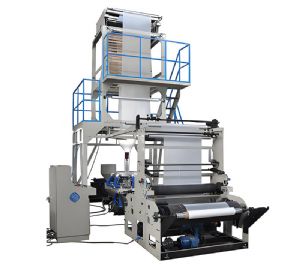
Blown Film Machine
Checklist for successful installation and commissioning: – Confirm that all equipment has arrived and is undamaged. – Verify that the site infrastructure (floor, power, cooling water, compressed air) meets specifications. – Have the foundation ready and drilled for anchor bolts. – Prepare a dedicated team for each discipline (mechanical, electrical, controls). – Secure a crane and rigging equipment for heavy lifts. – Have a stock of consumables (cleaning compounds, grease, spare fuses). – Schedule the manufacturer's service engineers well in advance. – Plan for language translation if needed. – Set up a communication protocol (daily meetings). – Document all changes made during installation. – After commissioning, run the line for at least 24 hours continuously at full speed to prove stability. – Conduct a formal handover with a signed acceptance certificate. In addition, the buyer should have a spare parts kit ready for the initial run, as early failures may occur. The service team should also provide a list of recommended spare parts to keep in stock. In conclusion, on-site installation and commissioning is a critical phase that, with proper preparation and execution, ensures the blown film line starts producing high-quality film quickly, delivering the expected return on investment.
