Internal bubble cooling (IBC) process
Internal bubble cooling (IBC) is a process that circulates conditioned, chilled air inside the bubble through a central tube inserted into the die. This internal cooling complements the external air ring, providing heat removal from both sides of the molten film. The IBC system consists of a blower, heat exchanger, dew point controller, and pressure regulation valves, delivering air at 10–20°C with controlled humidity to prevent condensation. The primary advantage is a 30–50% increase in output capacity without sacrificing bubble stability, because cooling is often the bottleneck in blown film lines. IBC also improves thickness uniformity by reducing the thermal gradient across the film, leading to tighter gauge tolerance (±2–3%). The system uses a pressure transducer to maintain constant bubble diameter and an internal temperature sensor for feedback. In coextrusion, IBC helps balance the cooling rates of different polymers, reducing internal stresses. The die must be designed with an internal mandrel to accommodate the IBC tube. IBC is particularly beneficial for thick films and high-speed lines. It adds capital cost and complexity, requiring careful sealing and maintenance of the air conditioning unit. However, energy savings per kg often justify the investment. Modern IBC systems are fully integrated with the line's PLC, allowing automatic adjustment of cooling intensity based on line speed and thickness. They are standard on high-output lines for packaging, agricultural, and shrink films, enabling throughput that external cooling alone cannot match.
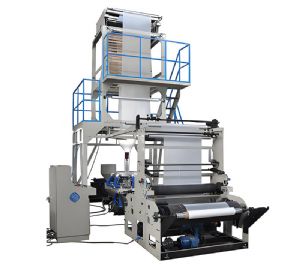
Blown Film Machine
Internal bubble cooling (IBC) is a process that circulates conditioned, chilled air inside the bubble through a central tube inserted into the die. This internal cooling complements the external air ring, providing heat removal from both sides of the molten film. The IBC system consists of a blower, heat exchanger, dew point controller, and pressure regulation valves, delivering air at 10–20°C with controlled humidity to prevent condensation. The primary advantage is a 30–50% increase in output capacity without sacrificing bubble stability, because cooling is often the bottleneck in blown film lines. IBC also improves thickness uniformity by reducing the thermal gradient across the film, leading to tighter gauge tolerance (±2–3%). The system uses a pressure transducer to maintain constant bubble diameter and an internal temperature sensor for feedback. In coextrusion, IBC helps balance the cooling rates of different polymers, reducing internal stresses. The die must be designed with an internal mandrel to accommodate the IBC tube. IBC is particularly beneficial for thick films and high-speed lines. It adds capital cost and complexity, requiring careful sealing and maintenance of the air conditioning unit. However, energy savings per kg often justify the investment. Modern IBC systems are fully integrated with the line's PLC, allowing automatic adjustment of cooling intensity based on line speed and thickness. They are standard on high-output lines for packaging, agricultural, and shrink films, enabling throughput that external cooling alone cannot match.
Процесс внутреннего охлаждения пузыря (IBC): Внутреннее охлаждение пузыря (IBC) — это процесс циркуляции кондиционированного охлаждённого воздуха внутри пузыря через центральную трубу, вставленную в головку. Это внутреннее охлаждение дополняет внешнее воздушное кольцо, обеспечивая отвод тепла с обеих сторон расплавленной плёнки. Система IBC состоит из вентилятора, теплообменника, регулятора точки росы и клапанов регулирования давления, подающих воздух при 10–20°C с контролируемой влажностью для предотвращения конденсации. Основное преимущество — увеличение производительности на 30–50% без потери стабильности пузыря, поскольку охлаждение часто является узким местом в линиях выдувной плёнки. IBC также улучшает равномерность толщины за счёт уменьшения теплового градиента по плёнке, что приводит к более жёсткому допуску (±2–3%). Система использует датчик давления для поддержания постоянного диаметра пузыря и внутренний датчик температуры для обратной связи. При соэкструзии IBC помогает сбалансировать скорости охлаждения различных полимеров, снижая внутренние напряжения. Головка должна быть спроектирована с внутренней оправкой для размещения трубы IBC. IBC особенно полезен для толстых плёнок и высокоскоростных линий. Он увеличивает капитальные затраты и сложность, требуя тщательной герметизации и обслуживания кондиционера. Однако экономия энергии на кг часто оправдывает инвестиции. Современные системы IBC полностью интегрированы с ПЛК линии, позволяя автоматически регулировать интенсивность охлаждения в зависимости от скорости линии и толщины. Они являются стандартом на высокопроизводительных линиях для упаковочных, сельскохозяйственных и термоусадочных плёнок, обеспечивая производительность, недостижимую при использовании только внешнего охлаждения.
Processo de resfriamento interno da bolha (IBC): O resfriamento interno da bolha (IBC) é um processo que circula ar condicionado e resfriado dentro da bolha através de um tubo central inserido na matriz. Este resfriamento interno complementa o anel de ar externo, fornecendo remoção de calor de ambos os lados do filme fundido. O sistema IBC consiste em um soprador, trocador de calor, controlador de ponto de orvalho e válvulas de regulação de pressão, fornecendo ar a 10–20°C com umidade controlada para evitar condensação. A principal vantagem é um aumento de 30–50% na capacidade de produção sem comprometer a estabilidade da bolha, pois o resfriamento é frequentemente o gargalo em linhas de filme soprado. O IBC também melhora a uniformidade da espessura ao reduzir o gradiente térmico através do filme, resultando em tolerância de espessura mais restrita (±2–3%). O sistema usa um transdutor de pressão para manter o diâmetro constante da bolha e um sensor de temperatura interna para feedback. Na coextrusão, o IBC ajuda a equilibrar as taxas de resfriamento de diferentes polímeros, reduzindo tensões internas. A matriz deve ser projetada com um mandril interno para acomodar o tubo IBC. O IBC é particularmente benéfico para filmes espessos e linhas de alta velocidade. Ele adiciona custo de capital e complexidade, exigindo vedação cuidadosa e manutenção da unidade de ar condicionado. No entanto, a economia de energia por kg frequentemente justifica o investimento. Os sistemas IBC modernos são totalmente integrados ao CLP da linha, permitindo ajuste automático da intensidade de resfriamento com base na velocidade da linha e na espessura. Eles são padrão em linhas de alta produção para filmes de embalagem, agrícolas e encolhíveis, permitindo produtividade que o resfriamento externo sozinho não pode alcançar.
Kuplan sisäinen jäähdytysprosessi (IBC): Kuplan sisäinen jäähdytys (IBC) on prosessi, joka kierrättää ilmastoitua jäähdytettyä ilmaa kuplan sisällä suulakkeeseen asetetun keskusputken kautta. Tämä sisäinen jäähdytys täydentää ulkoista ilmarengasta tarjoten lämmönpoistoa sulan kalvon molemmilta puolilta. IBC-järjestelmä koostuu puhaltimesta, lämmönvaihtimesta, kastepisteen säätimestä ja paineen säätöventtiileistä, toimittaen ilmaa 10–20 °C:ssa säädellyllä kosteudella kondensaation estämiseksi. Tärkein etu on 30–50 %:n lisäys tuotantokapasiteettiin vaarantamatta kuplan vakautta, koska jäähdytys on usein pullonkaula puhalluskalvolinjoissa. IBC parantaa myös paksuuden tasaisuutta vähentämällä lämpögradienttia kalvon poikki, johtaen tiukempaan paksuustoleranssiin (±2–3 %). Järjestelmä käyttää painelähetintä pitämään kuplan halkaisijan vakiona ja sisäistä lämpötila-anturia takaisinkytkentää varten. Yhteissuulakepuristuksessa IBC auttaa tasapainottamaan eri polymeerien jäähdytysnopeuksia vähentäen sisäisiä jännityksiä. Suulake on suunniteltava sisäisellä sydämellä IBC-putken mahdollistamiseksi. IBC on erityisen hyödyllinen paksuille kalvoille ja suurnopeuslinjoille. Se lisää pääomakustannuksia ja monimutkaisuutta vaatien huolellista tiivistystä ja ilmastointiyksikön huoltoa. Energiansäästöt kiloa kohti kuitenkin usein oikeuttavat investoinnin. Nykyaikaiset IBC-järjestelmät on täysin integroitu linjan PLC:hen, mahdollistaen jäähdytystehon automaattisen säädön linjan nopeuden ja paksuuden perusteella. Ne ovat vakiona suuritehoisilla linjoilla pakkaus-, maatalous- ja kutistekalvoille, mahdollistaen tuotannon, johon pelkkä ulkoinen jäähdytys ei pysty.
