Integrated System Design and Process Optimization for Plastic Film Extrusion Lines 2026
A plastic film extrusion line is an integrated system where each component – extruder, die, cooling, haul-off, gauging, winder – must be balanced to achieve optimal throughput and quality. The concept of "line balance" means that the capacity of each component must match the target output. For example, if the extruder can produce 400 kg/h, the cooling system must be able to remove the heat from 400 kg/h, the winder must be able to handle 400 kg/h of film, and the downstream converting must process that output. If one component is undersized, it becomes a bottleneck, limiting the entire line's output. Conversely, oversizing a component wastes capital and energy. Therefore, line design starts with the target output and works backwards: choose an extruder size that can deliver the required melt flow, then design a die that can handle that flow and produce the desired width, then select a cooling system with sufficient capacity (air ring blower, IBC chiller), then a haul-off with adequate traction and speed range, then a thickness gauge with appropriate scan speed and resolution, and finally a winder with the required roll diameter and automatic transfer. The control system must coordinate all components, typically via a PLC with a master speed setpoint that scales all drives proportionally. This ensures that when the line speed changes, all components (extruder screw, pumps, nip rolls, winder) change speed in unison, maintaining constant film thickness and tension. The integration of the reclaim system (edge trim recycling) is also part of the line; the reclaim rate must be factored into the extruder output, and the reclaim feeder must be synchronized with the virgin feed. In summary, a plastic film extrusion line is a symphony of machinery; its success depends on the careful selection and integration of each component to work seamlessly together.
The process optimization of a plastic film extrusion line involves not only hardware selection but also the tuning of operational parameters to achieve the desired film properties. This includes setting the temperature profile, screw speed, BUR, FLH, and line speed. The optimization typically starts with a baseline recipe for a specific resin and film thickness. The operator then performs a series of experiments, varying one parameter at a time (e.g., BUR from 2.5 to 3.0) while measuring film properties (haze, tear, gauge). The data is used to create a response surface, identifying the optimal combination. Advanced lines have an "auto-optimize" feature that uses a model-based approach to predict the effect of changes and suggests optimal settings. The optimization also considers energy consumption; running at the highest possible speed reduces energy per kg, but may increase scrap if quality drops. Therefore, the optimal operating point is where the marginal cost of scrap equals the savings from higher output. The line's efficiency is measured by the Overall Equipment Effectiveness (OEE), which is the product of availability (uptime), performance (speed vs. nominal), and quality (yield). To maximize OEE, the line must have rapid changeover capabilities (e.g., automatic die cleaning, quick screen changes) and a robust preventive maintenance program. The use of statistical process control (SPC) charts for key parameters (melt pressure, thickness, temperature) helps detect drifts early, preventing quality issues. In summary, optimizing a plastic film extrusion line is a continuous process that combines engineering, data analysis, and operator experience. It requires a systematic approach to identify and eliminate bottlenecks, reduce variability, and improve overall efficiency. The results are tangible: higher output, lower scrap, and better film quality, all contributing to increased profitability.
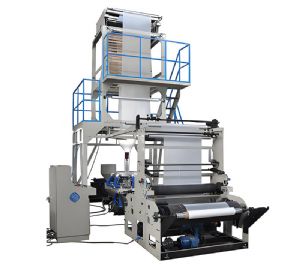
Blown Film Machine
Key optimization areas: Extruder throughput – maximize output without excessive melt temperature or pressure. Cooling efficiency – use IBC and chilled air to allow higher speeds. Gauge control – tune AGC for fastest response without oscillation. Winder tension – minimize tension variations to avoid telescoping. Changeover time – reduce by using quick-release connections and pre-heated components. Energy consumption – use VFDs on blowers and motors, and heat recovery systems. Reclaim ratio – increase as much as possible without affecting film quality. In practice, optimization is done through a "design of experiments" (DOE) approach, often with the help of specialized software that can handle multiple variables. The operator also plays a crucial role in monitoring the line and making small adjustments to maintain stability. Regular reviews of production data help identify long-term trends and opportunities for improvement. In conclusion, the plastic film extrusion line is more than the sum of its parts; it is an integrated system that, when properly designed and optimized, delivers high-quality film with exceptional efficiency. The investment in system integration and process optimization pays back quickly through reduced waste and increased output, making it a cornerstone of successful film manufacturing.
