Hopper drying and material conveying (for PA/EVOH)
Polyamide (PA) and ethylene vinyl alcohol (EVOH) are high-performance barrier resins used in multi-layer films for food and medical packaging. However, both are hygroscopic – they readily absorb moisture from the atmosphere, which must be removed before processing to prevent hydrolysis, which causes degradation, gel formation, and poor mechanical properties. Therefore, a proper hopper drying and material conveying system is essential. The drying system typically consists of a desiccant dryer (with a molecular sieve bed) that supplies dehumidified hot air (dew point of -40°C or lower) to the hopper, where the resin is heated (PA: 80-120°C; EVOH: 80-100°C) for several hours to drive off moisture. The residence time in the hopper must be sufficient – typically 2-4 hours at the recommended temperature. The dried resin must be conveyed to the extruder hopper without picking up moisture; therefore, the conveying system should use closed-loop drying air or be equipped with a dehumidifying hopper loader. The dryer's capacity must match the extruder's consumption – e.g., for 300 kg/h, the dryer must be rated for at least that capacity with adequate drying time. The hopper is usually insulated and has a level sensor to ensure continuous material flow. The dried resin should have a moisture content below 0.05% for PA and below 0.1% for EVOH. Moisture testers (e.g., Karl Fischer) are used for verification. Failure to properly dry PA or EVOH leads to severe problems: bubble instability, die deposits, film haze, and weak seal strength. Therefore, the drying system is not optional but mandatory for processing these resins.
The material conveying system moves resin from storage silos or gaylords to the dryer hopper, and then to the extruder. For PA and EVOH, the conveying air must also be dry – if not, the resin can pick up moisture during transfer. Therefore, many systems use a sealed conveying line with dry air (from the dryer) as the conveying medium. Alternatively, a vacuum conveying system with filters that remove moisture from the air can be used. The conveying system should be dust-free to prevent contamination. The hopper loader (often a vacuum type) should have a filter to remove fines, which can degrade and cause black specks. The drying hopper is typically large – with a capacity of 300-500 kg to allow for the residence time. The hot air is circulated by a blower, and the desiccant bed is periodically regenerated (usually with heated purge air). The dryer control system maintains the set temperature and dew point; alarms for high dew point or low temperature warn the operator. For multi-layer lines, each extruder using PA or EVOH must have its own dryer (or a central drying system with dedicated hoppers). The dried resin should be used within a short time (1-2 hours) after drying to avoid re-absorption. Therefore, the extruder hopper should be sealed and maintained under dry air. In summary, hopper drying and material conveying are critical infrastructure for processing hygroscopic barrier resins. Properly designed systems ensure consistent melt quality and film properties, preventing costly defects.
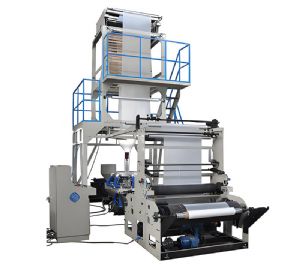
Blown Film Machine
Key parameters and maintenance: – Set dryer temperature according to resin supplier's recommendation. – Check dew point daily – should be below -40°C. – Monitor hopper temperature – if too low, moisture remains; if too high, resin may degrade. – Clean the hopper and conveying lines regularly to prevent contamination. – Replace desiccant beds every 1-2 years, or as indicated by dew point rise. – Ensure the hopper has a level sensor to prevent empty running. – If the line stops for more than an hour, purge the extruder with dry resin or use a purging compound. – For EVOH, which is particularly sensitive, consider using a nitrogen purge during shutdown. – Train operators on the importance of moisture control – they should know how to read the dryer's display and respond to alarms. – Keep a log of dryer settings and moisture test results. For large plants, a central drying system with a loop can supply multiple lines, but each line's hopper must have a separate dry air supply. The conveying system's filters should be cleaned regularly to maintain airflow. In conclusion, hopper drying and conveying for PA/EVOH is a sophisticated but essential part of barrier film production. Investing in high-quality dryers and conveying components ensures process reliability and product quality. Never compromise on drying – the cost of a failed run far exceeds the cost of proper equipment. With diligent operation, these systems provide years of trouble-free service.
