Gearbox and bearing preventive maintenance
The gearbox and bearings are critical mechanical components in a blown film extruder, responsible for transmitting torque from the motor to the screw while supporting radial and axial loads. Preventive maintenance is essential to avoid catastrophic failures that cause prolonged downtime and costly repairs. The gearbox is typically a heavy-duty helical or planetary type, operating under high torque and moderate speeds. Bearings (both in the gearbox and on the screw shaft) must withstand high temperatures and continuous operation. A well-planned preventive maintenance program includes regular oil analysis, vibration monitoring, temperature checks, and visual inspections. The frequency of maintenance depends on the line's operating hours and the severity of service; for high-output lines running 24/7, monthly checks are recommended. The first step is to establish a baseline: record the gearbox oil temperature, vibration levels, and bearing temperatures when the machine is new or after a major overhaul. These baselines are used to detect deviations that indicate wear or degradation. Operators should check the gearbox oil level daily – low oil level causes inadequate lubrication, leading to rapid wear. The oil should be changed according to the manufacturer's recommendation, typically every 2000-4000 operating hours or annually, whichever comes first. Use the specified oil grade – often ISO VG 320 or 460 synthetic gear oil – because it maintains viscosity at high temperatures. When changing oil, inspect the old oil for metal particles, which indicate gear or bearing wear. A magnetic plug in the drain can collect ferrous debris; analyze it to assess wear rate.
Bearing maintenance focuses on the main thrust bearing (which absorbs axial forces from the screw) and the radial bearings. These bearings are subjected to high loads and temperatures. Lubrication is usually provided by the same gearbox oil circulating system or by separate grease nipples. For grease-lubricated bearings, apply the recommended grease (e.g., lithium complex high-temperature grease) at scheduled intervals – typically every 500-1000 hours. Do not over-grease, as excess grease can cause overheating. For oil-lubricated bearings, ensure the oil circulation pump is functioning and the oil filter is clean. Regularly check the bearing housing temperature with an infrared thermometer – a sudden rise of 10°C above baseline indicates friction increase, possibly due to insufficient lubrication or misalignment. Vibration monitoring is a powerful tool: use an accelerometer to measure vibration velocity (mm/s) on the gearbox housing. An increase in vibration amplitude, especially at the gear mesh frequency, suggests gear tooth wear or bearing race damage. Many modern lines have permanent vibration sensors connected to the PLC for continuous monitoring. If vibration exceeds ISO 10816-3 limits (typically <4.5 mm/s for this type of machine), plan a shutdown for inspection. Also, listen for unusual noises – grinding, whining, or knocking sounds are early warnings. During scheduled shutdowns (e.g., annual maintenance), perform a thorough inspection: drain and flush the gearbox, remove the cover to inspect gear teeth for pitting, scoring, or wear patterns. Check bearing races for spalling or brinelling. Measure the backlash between gears to ensure it is within specification. If wear is found, plan for replacement or reconditioning.
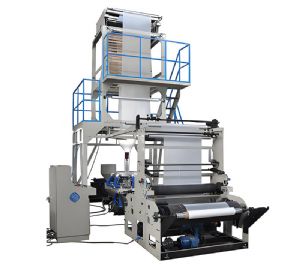
Blown Film Machine
Key preventive maintenance tasks with recommended frequencies: daily – check oil level, listen for abnormal noise, record temperatures; weekly – sample oil for visual clarity (cloudiness indicates water contamination), check oil filter pressure drop; monthly – measure vibration (trend analysis), check all bolted connections for tightness, inspect seals for leaks; quarterly – perform oil analysis (send sample to lab for viscosity, acid number, water content, particle count); annually – drain and replace oil, replace oil filter, inspect gears and bearings thoroughly, replace worn seals, check shaft alignment. For bearings specifically, the replacement interval is typically 3-5 years for thrust bearings and 5-8 years for radial bearings, but this varies with load and maintenance. Always keep spare bearings and seals in stock to reduce downtime. When replacing bearings, use only OEM or equivalent high-quality parts. The installation process requires careful heating (induction heater) to avoid damage during fitting. Also, ensure the screw is properly aligned with the gearbox output shaft; misalignment causes excessive bearing loads. Use dial indicators to check runout. Documentation is critical: maintain a logbook with all readings, oil changes, and repairs. This history helps predict when components will need replacement. Training operators to recognize early signs of bearing or gearbox trouble – like temperature spikes or unusual vibrations – is a key part of the program. Finally, consider using condition monitoring software that integrates with the plant's maintenance system to automate alerts. In summary, preventive maintenance for gearboxes and bearings is a disciplined, scheduled approach that extends equipment life, reduces unplanned downtime, and ensures consistent extrusion performance. Investing time and resources in this program pays dividends in productivity and cost savings.
