Food-grade packaging film line
A food-grade packaging film line is a blown film production system designed to manufacture films that comply with stringent regulatory standards for direct food contact, such as FDA (US), EU Regulation 10/2011, and GB (China) standards. These films are used for wrapping fresh produce, meat, cheese, bakery items, and ready-to-eat meals. The line must use certified food-grade resins – typically LDPE, LLDPE, mLLDPE, PP, or EVA – with approved additives (slip, anti-block, anti-fog, etc.) that are within permitted migration limits. The extruder is a standard barrier screw type, but the entire system must be clean and free from contaminants. The line often includes a dedusting system to prevent foreign particles. The cooling air is filtered to avoid contamination. The thickness gauge and AGC ensure consistent thickness for sealing performance. The film is often corona-treated to improve printability for labels. The winder produces rolls that are tightly wound to maintain freshness. The line speed is moderate (80-150 m/min) and output ranges from 100-400 kg/h. The film thickness varies from 15 to 100 microns depending on application.
The key challenge is ensuring the finished film meets all migration and sensory requirements. The resin must be FDA-listed (e.g., 21 CFR 177.1520 for PE). Additives must be at permitted levels. The line must be dedicated to food-grade production or thoroughly purged between runs (especially if previously used for non-food). The operator must use clean gloves and tools. The extruder barrel and die must be made of stainless steel or food-grade alloys to prevent rust. The air ring and cooling air must be filtered (HEPA) to remove airborne particles. The film is tested for overall migration (in simulants like ethanol or olive oil), heavy metals, and sensory odor. The line's control system records all process parameters for traceability. The line often includes an in-line metal detector to catch any metallic fragments. The film may be produced in multi-layer (3-layer) with the inner layer (sealant) made of high-purity mLLDPE, the outer layer for strength, and a core with recycled content? – but recycled content is generally not allowed for direct food contact unless it meets the same strict standards, so most food-grade films use virgin resin. The line's maintenance includes regular cleaning of the die and feed throat, and calibration of sensors. The operator must be trained in food safety practices (HACCP principles).
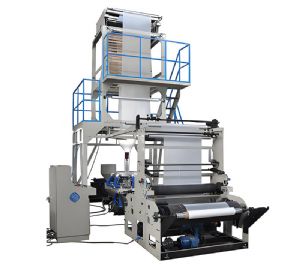
Blown Film Machine
Key technical parameters: melt temperature 180-220°C; BUR 2.5-3.5; frost line height 400-600 mm; die gap 1.0-2.0 mm. The film's optical properties – clarity and gloss – are important for consumer appeal. The seal strength must be sufficient for the packaging application. The anti-fog additives prevent condensation inside the package. The film's oxygen and moisture transmission rates may be important for shelf life. The line must have a dust-free environment; many food-grade lines are located in clean rooms or positive pressure areas. The quality control includes regular testing for migration (using GC-MS), tensile, and seal integrity. The line's output must be validated for each resin batch. The cost is higher due to the purity requirements and regulatory compliance. The payback is achieved through premium prices for food-grade films. The line can also produce biodegradable food films using PLA, but they require different screw and temperature settings.
Market trends and operational insights: demand for food-grade films is growing with convenience foods and longer shelf life. The trend is toward mono-material recyclable packaging (all PE) for easier recycling, while maintaining food safety. This requires advanced mLLDPE grades with high barrier. The line's flexibility to switch between different film structures (plain, anti-fog, high-clarity) is important. The operator must document all cleaning and changeover procedures. The line's downtime for cleaning is higher than non-food lines. Many converters have separate lines for food and non-food. The capital investment is similar to a standard packaging line, but the operating costs are higher due to stricter hygiene. Overall, the food-grade packaging film line is a critical asset for the food industry, ensuring that films not only protect but also preserve food safety. Its operation requires a culture of quality and compliance, with continuous improvement to meet evolving regulations and consumer expectations.
