Edge trimming and in-line reclaim system
During blown film production, the edges of the film are often non-uniform or have die lines, so they are trimmed off to ensure consistent width and quality. Edge trimming is typically done at the winder or a dedicated slitting station, cutting 20-100 mm from each side. The trimmed edges represent a material waste stream that can be significant – up to 3-5% of total output. An in-line reclaim system recovers this waste by granulating the trim and feeding it back into the extruder, reducing raw material cost and environmental impact. The system consists of a trim transport (pneumatic or mechanical), a granulator (to shred the film into flake), and a conveying system (blower or conveyor) that sends the flake to the extruder hopper or a storage silo. The granulator typically has a screen to control flake size, and may include a metal detector to catch contaminants. The reclaimed material is usually blended with virgin resin in a controlled ratio, often through a gravimetric blender, to maintain consistent quality. The reclaim can be fed directly into the extruder feed throat, but it must be done uniformly to avoid surging. Some lines use a separate extruder for reclaim (especially in multi-layer lines, where reclaim is added to the core layer). The benefits are substantial: material savings, reduced waste disposal costs, and lower carbon footprint. However, the reclaim may contain degraded polymer, gels, or contaminants, which can affect film properties. Therefore, the reclaim rate is typically limited to 10-30% for commodity films, less for high-quality films. The granulator must be designed to produce consistent flake without too much dust. Dust can cause feeding problems and degradation. The system should also have a dust extraction unit.
Design considerations for an in-line reclaim system: The trim width and speed determine the required granulator capacity – it must handle the trim volume at maximum line speed. The trim transport should be reliable; pneumatic systems are common, using a blower to suck trim through a duct to the granulator. The granulator blades must be sharp and regularly adjusted – dull blades produce long stringy pieces that clog the conveying. The flake size is typically 5-10 mm. A metal detector is recommended to prevent damage to the screw. The blending ratio should be controlled accurately – use a gravimetric feeder that measures the reclaim flow and adjusts the virgin feed accordingly. Some systems have a surge bin to store reclaimed flake, smoothing out fluctuations. The reclaim system should be integrated with the line's control system; alarms for jams or low reclaim feed are important. Maintenance: regularly check granulator blades, clean the ducts, inspect the blower, and calibrate the feeder. The reclaim may also be dried (if hygroscopic) before feeding. In multi-layer lines, putting reclaim in the core layer is common to avoid surface defects. Operators must monitor the film quality for any changes when reclaim ratio is adjusted. In summary, edge trimming and in-line reclaim systems are a cost-effective way to reduce waste and improve sustainability. They are a standard feature on most modern blown film lines, and proper operation ensures that the reclaimed material does not compromise film quality.
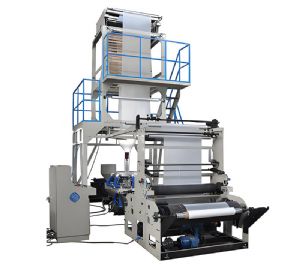
Blown Film Machine
Best practices for reclaim: – Keep reclaim content consistent – sudden changes affect viscosity and bubble stability. – Use a fine screen in the reclaim extruder (if separate) to filter contaminants. – Limit reclaim for films with high clarity or strength requirements. – Regularly clean the granulator to prevent bacterial growth (if using biodegradable resins). – Monitor melt pressure and adjust feed rate. – Use a gravimetric blender for accurate ratio. – For high-quality films, consider post-consumer reclaim only in non-critical layers. – If reclaim causes gels, increase the screen mesh size. – Test the film properties periodically to ensure reclaim is within limits. – Train operators on the reclaim system's operation and troubleshooting. In-line reclaim is not just about waste reduction; it also reduces the need for disposal, lowering environmental impact. With rising resin prices, reclaim becomes increasingly economical. Many converters aim for zero waste, making the reclaim system a key component of their sustainability strategy. Overall, edge trimming and in-line reclaim systems are a win-win for cost and environment.
