CE / ISO certified film blowing machinery
CE marking is a mandatory conformity indicator for machinery sold within the European Economic Area, signifying that the equipment meets EU safety, health, and environmental protection requirements. For blown film lines, CE certification involves compliance with the Machinery Directive (2006/42/EC), Low Voltage Directive (2014/35/EU), and EMC Directive (2014/30/EU). The manufacturer must conduct a risk assessment, design safety features (emergency stops, guards, interlocks), and provide a technical file and a Declaration of Conformity. CE marking is not a quality certificate but a safety certificate; it indicates the machine is safe to operate when used as intended. For buyers outside Europe, CE marking may not be mandatory, but it is often considered a mark of quality and responsibility, as it requires rigorous testing and documentation. ISO certification, particularly ISO 9001 (Quality Management Systems), is a voluntary standard that demonstrates the manufacturer has a structured quality system covering design, production, installation, and service. ISO 9001-certified manufacturers follow documented processes, conduct internal audits, and continuously improve. ISO 14001 (Environmental Management) is also relevant for sustainable operations. For blown film machinery, ISO certification gives buyers confidence in the supplier’s consistency and reliability. Many large converters require their equipment suppliers to be ISO 9001 certified as a condition of purchase. CE marking is often a prerequisite for machines installed in Europe, but buyers elsewhere may also request it to ensure safety standards. In addition, some lines may have specific certifications like UL (for electrical safety in North America) or GOST (for Russia). The supplier should provide the relevant certificates and a copy of the Declaration of Conformity upon request.
Verifying CE/ISO certification: The buyer should ask for the supplier’s CE certificate (issued by a notified body, if applicable) and review the technical file. However, many manufacturers self-certify CE, which is allowed for most machinery if they follow the harmonized standards. To ensure validity, ask for the EC Declaration of Conformity which lists the applicable directives and standards. For ISO 9001, the supplier should provide a copy of their certificate with the scope (e.g., “design and manufacture of blown film extrusion lines”). Check the expiry date and the certifying body’s credibility (e.g., TÜV, BSI, SGS). Some buyers also conduct an audit to verify that the quality system is implemented on the shop floor. CE marking does not guarantee that the machine will produce high-quality film, only that it is safe. ISO 9001 is more indicative of quality management, but it also does not guarantee defect-free products. Therefore, buyers should combine certification checks with technical evaluation and reference checks. In summary, CE and ISO certifications are important indicators of a manufacturer’s commitment to safety and quality. They reduce risks and may be required for certain markets. While not the only criteria, they should be part of the supplier selection process. A supplier that invests in these certifications is likely to be more reliable and easier to work with. In conclusion, CE and ISO certified blown film machinery provides a baseline of safety and quality assurance. It simplifies regulatory compliance and builds trust between buyer and seller. When evaluating quotes, prioritize suppliers who hold these certifications, and verify their authenticity. This due diligence pays off through safer operations, better machine reliability, and smoother market access.
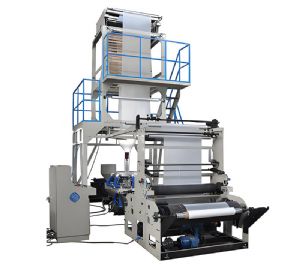
Blown Film Machine
What CE certification covers for blown film lines: – Electrical safety: grounding, insulation, protection against shock. – Mechanical safety: guards over moving parts, emergency stop buttons, two-hand controls for hazardous areas. – Noise emissions: must be measured and declared. – Vibration levels: for operator comfort. – Instructions: must be provided in the official language of the user country. – Marking: CE logo on the machine with manufacturer's name and year. For ISO 9001: – Clear quality objectives and processes. – Document control and records. – Internal audits and corrective actions. – Continuous improvement cycle. – Competence and training of personnel. To verify CE, check if the supplier has used a Notified Body (for some machinery, third-party involvement is required). For ISO, check the certification body’s accreditation (e.g., UKAS, ANAB). Also, ask for the full quality manual summary. Some buyers also request additional certifications like ATEX (for explosive environments) or CSA (for Canada). In summary, CE and ISO certifications are valuable signals of a manufacturer’s professionalism. They should be verified and considered alongside other factors like technical performance, price, and support. Do not rely solely on certifications; use them as one of several decision criteria.
