Blown film plant
A blown film plant is a dedicated manufacturing facility housing one or more blown film extrusion lines, along with all supporting infrastructure – raw material storage, blending, reclaim, quality control, packaging, and maintenance workshops. The plant layout is crucial for material flow efficiency: resin silos are typically placed outdoors near the loading bay, with pneumatic conveying systems feeding the extruder hoppers. The extrusion lines are arranged in parallel with sufficient spacing for operator access, roll handling, and maintenance. Downstream, a finishing area includes slitters, rewinders, and bag-making machines if the plant produces finished bags. A well-designed plant minimizes cross-contamination between different resin types and allows for flexible production scheduling.
Capacity planning for a blown film plant involves calculating total output based on number of lines, average throughput, and uptime. For example, a plant with three lines each producing 300 kg/h at 85% efficiency yields about 6,100 kg per day (24h). The plant must also have sufficient cooling water capacity (often a cooling tower and chiller) to remove heat from extruder barrels and air rings. Compressed air is essential for bubble inflation and pneumatic conveying; a dedicated compressor room with dryers is required. Electrical power demand can be several hundred kilowatts; transformers and switchgear must be sized accordingly. Additionally, the plant needs a quality control laboratory equipped with tensile testers, haze meters, and thickness gauges to test film properties per standards (ASTM, ISO).
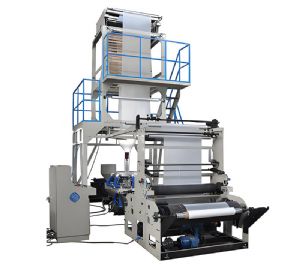
Blown Film Machine
Key operational considerations for a blown film plant include production planning (campaigns to minimize grade changeovers), inventory management of raw materials and finished rolls, and waste reduction through edge trim reclaim and reprocessing. Environmental compliance is also critical: the plant must manage exhaust air from dryers, noise from blowers, and any solvent emissions (though blown film is generally solvent-free). Many plants adopt lean manufacturing practices to reduce downtime and improve overall equipment effectiveness (OEE). Regular training for operators and maintenance staff is essential to handle start-ups, shutdowns, and troubleshooting. The plant should have a well-documented standard operating procedures (SOPs) for each machine, including cleaning, safety, and emergency stops. Furthermore, inventory of spare parts – such as heater bands, thermocouples, screens, and bearings – must be maintained to minimize downtime.
When expanding or building a new blown film plant, feasibility studies consider market demand for specific film types (e.g., shrink, stretch, agricultural, barrier). The plant's location affects logistics costs; proximity to resin suppliers and major customers reduces transportation expenses. Automation level is a key decision: highly automated plants with automatic roll handling, robotic palletizing, and centralized control can operate with fewer operators but have higher capital investment. Conversely, manual lines are cheaper but labor-intensive. In recent years, blown film plants have adopted energy-saving technologies such as variable frequency drives on blowers and extruder motors, heat recovery from barrel cooling, and high-efficiency air rings. Sustainability initiatives also include using recycled resin content, reducing scrap, and implementing zero-landfill waste programs. A well-run blown film plant can achieve profit margins through efficient production, consistent quality, and rapid response to customer orders. Ultimately, the plant's success depends on balancing capital cost, operational excellence, and market positioning.
