Blown film manufacturing line
A blown film manufacturing line is a complete production system that transforms polymer resin pellets into high-quality plastic film through a continuous extrusion and blowing process. The line typically starts with a raw material handling section that includes silos, pneumatic conveyors, and gravimetric blenders to mix virgin resin, masterbatch, and recycled materials in precise ratios. This blended material is fed into the extruder hopper, where it is melted, homogenized, and pressurized by the screw and barrel. The molten polymer then passes through a screen changer to remove contaminants, and a melt pump ensures stable flow to the circular die. At the die, the melt exits as a thin-walled tube, which is inflated by internal air to form a bubble, cooled by an air ring, and then collapsed by a collapsing frame into a flat double-layer film. The film is pulled by nip rollers, passes through a thickness gauge and optional corona treater, and finally wound onto cores by a turret winder. Each section is coordinated by a central PLC control system that monitors temperatures, pressures, speeds, and thickness in real time, allowing operators to maintain consistent product quality.
The design of a blown film manufacturing line depends heavily on the target film application – packaging films require high clarity and uniform gauge, agricultural films need UV stability and tear resistance, while industrial liners prioritize strength and low cost. For high-volume production, multi-layer lines (3, 5, or 7 layers) are preferred because they combine different resins to achieve specific properties like sealability, barrier, and stiffness in one film. These lines have multiple extruders feeding a co-extrusion die, with each extruder dedicated to one layer. The line speed, output, and film width are interlinked: increasing speed reduces thickness at a given output, while wider films require larger die diameters and more cooling capacity. Modern manufacturing lines also integrate online quality control systems – including thickness scanning (beta or X-ray), optical defect detectors, and automatic gauge control (AGC) that adjusts the die gap or air ring segments to correct thickness variations across the width. This reduces scrap and ensures compliance with customer specifications. Additionally, edge trim recycling systems granulate and convey the trimmed edges back to the extruder feed, minimizing material waste and improving sustainability.
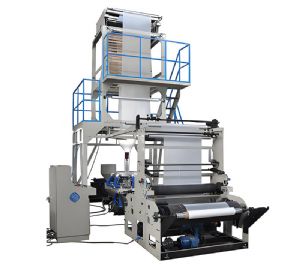
Blown Film Machine
Key performance metrics for a blown film manufacturing line include overall output (kg/h), line efficiency (uptime percentage), film thickness tolerance, and energy consumption per kilogram of film. Typical output capacities range from 50 kg/h for small pilot lines to over 1000 kg/h for large industrial lines. Line efficiency is affected by changeover time, maintenance stops, and scrap generation; best-in-class lines achieve >95% uptime. Thickness tolerance is critical – for high-value films, ±3% of target is required, while commodity films may allow ±8%. Energy efficiency has become a major focus, with variable frequency drives on blowers and motors, insulated barrels, and heat recovery systems reducing power consumption by 15-30%. The control system also tracks melt pressure and temperature profiles, providing alerts for abnormal conditions like screen clogging or heater failure. Furthermore, the line's flexibility to process different resins (LDPE, LLDPE, HDPE, PP, PA, EVOH) and incorporate recycled content is increasingly important. A well-designed manufacturing line can switch between products in under 2 hours, minimizing downtime and inventory.
Installation of a blown film manufacturing line requires careful planning of floor space, utilities, and workflow. A typical line occupies 20-40 meters in length, with height clearance for the bubble (often 6-10 meters). Utilities include three-phase electricity (400V or higher), cooling water (for extruder barrels and air ring chillers), and compressed air (for bubble inflation and pneumatic conveying). The plant must also have exhaust systems to remove fume and heat from the extruder area. Commissioning involves start-up procedures like purging, die lip cleaning, and bubble initiation; operators must be trained to handle common issues like bubble instability, die lines, and gauge bands. Safety systems – emergency stops, melt pressure relief valves, and interlocked guards – are mandatory. After commissioning, the line enters a production phase where routine maintenance (daily cleaning, weekly lubrication, monthly filter changes, annual screw inspection) ensures long-term reliability. With Industry 4.0 integration, modern lines offer remote monitoring and predictive maintenance, using vibration and temperature sensors to forecast component failures before they occur. This reduces unplanned downtime and extends equipment life.
The market for blown film manufacturing lines is growing, driven by demand for flexible packaging, e-commerce protective materials, and agricultural films. Manufacturers are increasingly seeking lines that can process biodegradable resins (PLA, PBAT) and high percentages of post-consumer recycled (PCR) content, requiring screw designs optimized for higher melt flow and better degassing. Additionally, energy efficiency and automation are key differentiators – lines with automatic roll handling, robotic palletizing, and AI-based process optimization command premium prices but offer lower operating costs. When selecting a supplier, buyers evaluate not only the hardware but also after-sales support, spare parts availability, and training programs. Many suppliers offer modular designs, allowing future upgrades like adding IBC, additional extruders, or advanced gauging systems. Overall, a well-chosen blown film manufacturing line is a long-term investment that can deliver consistent quality, high output, and rapid return on investment for converters and film producers worldwide.
