Air ring and die lip cleaning procedure
Regular cleaning of the air ring and die lip is essential for maintaining consistent film quality and preventing defects like die lines, gauge bands, and haze. The air ring delivers cooling air to the bubble, and any dirt, polymer deposits, or dust on its lips or vanes disrupts airflow, causing uneven cooling and bubble instability. The die lip, where the melt exits, is prone to build-up of degraded polymer, carbon deposits, or contaminants that create longitudinal streaks (die lines) on the film. Cleaning should be performed at scheduled intervals – typically every shift for the air ring (wipe down) and every 2-4 weeks for the die lip, depending on the resin and operating conditions. For heavy-duty lines, cleaning frequency may be higher. Safety is paramount: the die and air ring are hot (200°C+); always wear heat-resistant gloves, face shield, and protective clothing. Ensure the line is shut down and locked out (LOTO) before any disassembly. Have a fire extinguisher nearby because hot polymer is flammable.
For the air ring cleaning: first, turn off the blower and allow the ring to cool slightly (but not completely – warm is easier to clean). Remove the air ring cover or upper lip section (if detachable) using appropriate tools. Use a soft brass scraper or wooden stick to gently remove any polymer deposits from the lip surfaces and the vanes. Avoid steel tools that can scratch the precision-machined surfaces. After scraping, use a soft brush (brass or nylon) and a heat-safe solvent (like a purging compound or a commercial cleaner) to wipe the surfaces. Apply the solvent with a lint-free cloth, then wipe dry. Also, clean the air ring's air supply slots and holes using compressed air and a small brush. Check that all vanes are free and move smoothly. Reassemble the air ring carefully, ensuring it is level and centered. For dual-lip air rings, pay special attention to the inner and outer lip gaps – if they were adjusted, note the settings before disassembly. After reassembly, check the air flow pattern with a smoke stick to confirm even distribution. The frequency of air ring cleaning can be reduced by using filtered air and maintaining a clean environment. Some lines have an automatic air ring cleaning system that uses a purge cycle, but manual cleaning is still needed periodically.
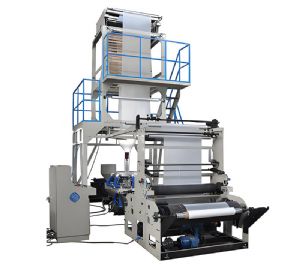
Blown Film Machine
For die lip cleaning: the die is at operating temperature (180-240°C). This is a more delicate operation. Start by purging the extruder with a cleaning compound (e.g., a high-viscosity purging resin) to push out degraded material. Then reduce the line speed to near zero. Use a brass scraper (never steel) to carefully scrape the die lip (both inner and outer) to remove deposits. Work from the center outward to avoid pushing debris into the die gap. Use a copper wire brush for stubborn deposits. After scraping, wipe the lip with a cotton cloth soaked in purging solvent or a suitable solvent (like a hydrocarbon-based cleaner) – ensure the solvent is compatible with the die material. Be cautious not to drip solvent onto the hot melt – it can vaporize and cause burns. For a more thorough cleaning, you may need to remove the die lip sections (if the die has a removable lip) – this is a major maintenance task. After cleaning, inspect the lip for any nicks or scratches – if any, they may need to be polished with fine emery paper (600 grit or finer) in the direction of melt flow. Then, close the die gap to the initial setting and restart the line with purging compound until the film is clean. Finally, set the die gap to the required thickness and resume production. Always record the cleaning date and any adjustments made.
Preventive measures: to reduce cleaning frequency, use a good purging compound when changing resins or colors. Avoid overheating the resin, which causes degradation and deposits. Use a finer screen pack to catch contaminants. Some lines use a die lip coating (e.g., non-stick) to reduce adhesion. Also, maintain a clean production area – dust and fibers get drawn into the air ring. Train operators to do daily visual inspection of the die lip – any visible deposit should be removed immediately. For the air ring, some lines use a protective cover when not in use. In summary, cleaning the air ring and die lip is a routine but critical maintenance task. Following a standardized procedure with proper tools and safety measures ensures consistent film quality, reduces scrap, and extends the life of the equipment. It is a skill that all blown film operators must master.
