Advanced Wear Management and Energy Efficiency in Heavy-Duty Film Blowing Machines 2026
Heavy-duty film blowing machines process abrasive materials like recycled resins, filled compounds (e.g., calcium carbonate), and high-viscosity polymers, leading to significant wear on the screw, barrel, and die. The screw flights and barrel liner are subject to abrasion, increasing the clearance and reducing output and melt quality. To manage wear, the screw is often hardfaced with tungsten carbide or Stellite, and the barrel is lined with a bimetallic alloy. The wear rate is monitored by measuring output at a fixed screw speed; a decline of >5% indicates significant wear. The screw should be pulled out for inspection annually, and reconditioning (hardfacing and regrinding) is performed when the flight clearance exceeds 0.8-1.0 mm. Reconditioning restores output and efficiency, and costs 30-50% of a new screw. The die lip also experiences wear from abrasive fillers; the lip can be re-machined or replaced. In summary, proactive wear management is essential for maintaining the performance of an HD line. Regular inspection, reconditioning, and replacement of worn parts ensure consistent output and quality, extending the machine's service life. The operator should track output trends and schedule maintenance accordingly. Investing in a spare screw minimizes downtime during reconditioning.
Energy efficiency is a major concern for HD lines, which consume significant electricity (motor power up to 400 kW) and thermal energy. Strategies to reduce energy consumption include using high-efficiency IE3/IE4 motors with VFDs, which can save 10-20% of motor energy. The barrel heating can be optimized by using ceramic heater bands with insulation, reducing heat loss. Heat recovery systems can capture waste heat from barrel cooling water (40-60°C) and use it for preheating the resin drying air or for space heating. The chiller for IBC can be optimized by using a variable-speed compressor. The air ring blower can be equipped with a VFD to match the cooling demand. The overall energy consumption can be reduced by 15-25% through these measures, with a payback period of 1-3 years. In summary, energy efficiency is a key differentiator for HD lines. By implementing energy-saving technologies and practices, converters can reduce operating costs and improve sustainability. The investment in high-efficiency motors and heat recovery systems is typically recovered within a few years. In conclusion, wear management and energy efficiency are critical aspects of operating a heavy-duty film blowing machine. By proactively managing wear and implementing energy-saving measures, converters can maximize the line's productivity and profitability while reducing environmental impact.
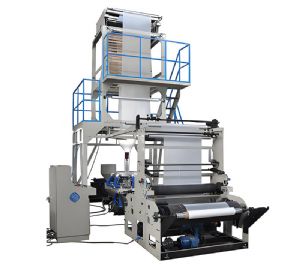
Blown Film Machine
Wear management practices: – Use hardfaced screw (tungsten carbide or Stellite). – Use bimetallic barrel with wear-resistant liner. – Monitor output at fixed RPM to detect wear. – Schedule annual screw pull-out for inspection. – Recondition screw when clearance exceeds 0.8-1.0 mm. – Keep a spare screw to minimize downtime. – Inspect die lip for wear; re-machine or replace as needed. – Use screens to filter abrasive particles. Energy efficiency measures: – IE3/IE4 motors with VFDs on extruder, blowers, and pumps. – Ceramic heater bands with insulation. – Heat recovery from barrel cooling water. – VFD on chiller compressor. – VFD on air ring blower. – Optimize line speed to run at maximum efficient throughput. – Regular maintenance to prevent inefficiencies (e.g., clean heat exchangers). In practice, energy audits are recommended to identify the most cost-effective measures. The payback for energy upgrades is often 1-3 years, making them a sound investment. In conclusion, wear management and energy efficiency are integral to the successful operation of heavy-duty film blowing machines, ensuring long-term reliability and cost-effectiveness.
