Advanced Warranty Claim Process and Spare Parts Inventory Optimization for Blown Film Lines 2026
An efficient warranty claim process minimizes downtime when a covered part fails. The buyer should establish a clear internal procedure: when a defect is suspected, the operator should document the issue with photos, time stamps, and any relevant process data (e.g., melt pressure, temperature). The contact person should then submit a claim to the supplier’s service department via the agreed channel (email, portal). The claim should include the part number, serial number, failure description, and supporting evidence. The supplier will typically respond within 24-48 hours with an assessment and a decision on replacement or repair. To expedite, the buyer can pre-authorize the supplier to ship the replacement part immediately upon claim submission, with the final decision made later. This is often part of a premium support agreement. In summary, a streamlined claim process reduces the time between failure and resolution. The buyer should train operators on proper documentation and have a designated claims coordinator. In conclusion, an advanced warranty claim process ensures rapid resolution, minimizing production impact.
Spare parts inventory optimization involves balancing the cost of holding inventory against the cost of downtime. The criticality of each part determines the stock level: critical parts (those with long lead times or that cause immediate shutdown) should be kept on-site. Parts with moderate lead times can be stocked at a local distributor, and non-critical parts can be ordered as needed. The buyer should use a Pareto analysis (80/20 rule) to identify the most critical parts. The inventory level should be based on the part's failure rate and lead time. The buyer should also consider obsolescence: as the line ages, parts may become unavailable, so it's wise to stock up on custom parts before the supplier discontinues them. In practice, the buyer should review the inventory quarterly and adjust based on usage. In conclusion, advanced spare parts inventory optimization ensures that the right parts are available when needed, balancing cost and risk, and keeping the line running with minimal downtime.
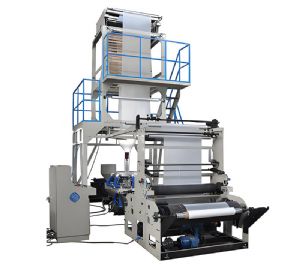
Blown Film Machine
Warranty claim best practices: – Document failures with photos and data. – Submit claims with all required information. – Use pre-authorization for rapid shipment. – Keep a log of all claims and outcomes. – Review warranty performance annually to assess supplier reliability. Spare parts inventory optimization: – Classify parts by criticality (A, B, C). – Set stock levels based on lead time and failure rate. – Use a reorder point system. – Consider consignment stock with supplier. – Review inventory quarterly; adjust for obsolescence. – For custom parts, monitor supplier’s discontinuation notices. Cost-benefit: The cost of holding inventory (capital, storage) vs. cost of downtime (lost production, labor). A typical guideline: keep 1-2 weeks of consumables, 1 set of critical spares (e.g., screw, die). For expensive custom parts, consider a shared stock with other converters or a purchase agreement with the supplier. In practice, the buyer should work with the supplier to forecast parts needs based on the line's operating hours. In conclusion, advanced warranty and spare parts management are essential for maximizing uptime and reducing total cost of ownership of a blown film line.
