Advanced Utility Integration and Energy Management in Blown Film Plants 2026
A blown film plant consumes significant amounts of electricity (for extruder motors, blowers, chillers) and thermal energy (for heating). Effective utility integration and energy management can reduce operating costs by 15-25%. The primary utilities are: electrical power, cooling water, compressed air, and chilled water (for IBC). The electrical distribution must be designed with adequate capacity and redundancy; extruders are major loads (100-500 kW each). The use of variable frequency drives (VFDs) on blowers, pumps, and extruder motors can reduce electricity consumption by 20-30% compared to fixed-speed drives. The cooling water system is critical for barrel cooling and chillers; it should be a closed-loop system with a cooling tower or chiller. The water temperature must be stable (10-15°C) to ensure consistent barrel cooling. A chiller plant with a water-cooled condenser is more efficient than air-cooled; the waste heat from the chiller can be recovered for space heating or drying. The compressed air system supplies the bubble inflation, pneumatic conveyors, and actuators; it should be sized for peak demand with a buffer tank. The air should be dry and oil-free; a refrigerated dryer and filters are essential. The energy consumption of compressed air is often underestimated; leaks can waste 20-30% of generated air. Regular leak detection and repair are important. In summary, utility integration involves designing systems that are properly sized, efficiently operated, and, where possible, use heat recovery to reduce overall energy consumption.
Energy management in a blown film plant goes beyond utility efficiency; it includes monitoring and controlling energy use in real-time. An Energy Management System (EMS) can track consumption per line, per product, and per kg of film. This data helps identify high-consumption periods and optimize operating parameters. For example, running the line at the optimal speed and temperature balance can reduce energy per kg. The EMS can also control the chiller plant to match load, avoiding oversizing. Heat recovery opportunities: the barrel cooling water (typically 40-60°C) can be used to preheat the resin drying air, reducing the dryer's energy demand. The air ring blower exhaust (warm air) can be used for space heating in winter. The chiller's condenser heat can be recovered for process water preheating. Implementing these heat recovery measures requires additional investment in heat exchangers and ductwork, but the payback period is often 1-3 years. The plant's lighting should be LED with motion sensors. The building envelope should be well-insulated to reduce HVAC load. In summary, energy management is a holistic approach that combines equipment efficiency, heat recovery, and operational optimization. It not only reduces costs but also lowers the plant's carbon footprint, which is increasingly important for sustainability reporting. In conclusion, a blown film plant's utility systems are its lifeblood. By integrating them effectively and managing energy consumption, converters can achieve significant cost savings and environmental benefits. Regular energy audits are recommended to identify new opportunities. With rising energy costs, energy management is no longer optional but a competitive necessity. Investing in energy-efficient technologies and practices pays back quickly and enhances the plant's long-term viability.
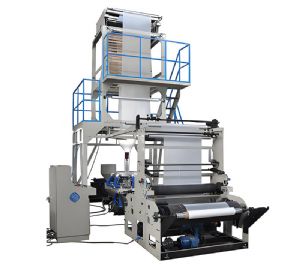
Blown Film Machine
Key energy-saving measures: – Use VFDs on all large motors (extruders, blowers, pumps). – Install high-efficiency (IE3 or IE4) motors. – Optimize chiller setpoint to the highest acceptable temperature (reducing load). – Use a cooling tower with a variable-speed fan. – Recover barrel cooling heat for drying or space heating. – Insulate all hot surfaces (barrels, dies, pipes) to reduce heat loss. – Use energy-efficient air ring blowers with high static pressure. – Implement a compressed air leak detection and repair program. – Use LED lighting with occupancy sensors. – Install a centralized EMS to monitor and control energy use. – Train operators on energy-saving practices (e.g., turning off equipment when not in use). – Consider solar PV panels for on-site electricity generation. In conclusion, energy management in a blown film plant is a continuous improvement process. By combining technology, monitoring, and behavior change, converters can reduce energy costs by 15-25%, improving profitability and sustainability. The initial investment in energy-efficient equipment and controls is typically recovered within 2-3 years, making it a wise financial decision.
