Advanced Use of Purging Compounds and In-Situ Cleaning Techniques for Die Lip Maintenance 2026
Traditional die lip cleaning requires disassembly and manual scraping, which is time-consuming and risks damaging the lip. Advanced in-situ cleaning methods use chemical purging compounds that soften and remove deposits while the extruder is running. These compounds are typically formulated with reactive agents that break down carbonized polymer. The procedure: stop feeding the production resin, introduce the purging compound (e.g., a low-viscosity resin with active ingredients), and run it through the extruder and die at elevated temperature for a specified time. The purging compound dissolves the deposits, and they are flushed out. After purging, the line is purged with production resin to remove the compound. This method reduces downtime and eliminates the need for manual scraping. However, the effectiveness depends on the compound's compatibility with the resin and the deposit type. Some compounds are designed for specific polymers (PE, PP). In summary, purging compounds are a valuable tool for die lip maintenance, especially for frequent product changes. The operator must follow the manufacturer's instructions for temperature and dwell time. Overuse of aggressive compounds can cause degradation or die corrosion; use as directed.
Another in-situ technique is the use of a "die lip cleaner" that consists of a rotating brass brush that can be inserted into the die lip while the extruder is running at low speed. This mechanical cleaning can remove surface deposits without stopping the line. However, this method is less common and requires specialized equipment. For stubborn carbon deposits, a chemical solvent can be applied to the lip with a swab while the die is hot, but this is risky and should be done by experienced personnel. In practice, many converters combine purging compounds with periodic manual cleaning to maintain die lip condition. The choice of method depends on the resin, the severity of deposits, and the operator's preference. In conclusion, advanced purging compounds and in-situ cleaning techniques offer efficient alternatives to manual die lip cleaning, reducing downtime and improving productivity. Proper selection and usage of these compounds are essential for effective deposit removal without damaging the die or contaminating the film.
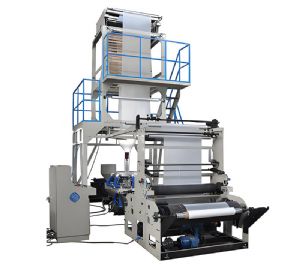
Blown Film Machine
Purging compounds: Types: low-viscosity resins with active ingredients (e.g., fluoropolymers, peroxides). Application: for PE, PP, PA, EVOH. Procedure: stop production resin, feed purging compound at recommended rate. Temperature: increase barrel/die temperature as per compound instructions. Dwell time: 10-30 minutes. Flush: purge with production resin until compound is gone. Benefits: reduces manual cleaning frequency, less downtime, safer. Limitations: not effective for heavy carbon deposits; may require multiple cycles. In-situ mechanical cleaners: Brass brush assembly that can be inserted into die lip. Rotates to remove deposits. Requires careful alignment to avoid damage. Less common, used for specific applications. Chemical swabbing: Solvent applied to lip with cotton swab. Only for small deposits; risk of fire and fumes. Not recommended for routine use. Safety: Use purging compounds in well-ventilated area. Follow MSDS guidelines. Avoid contact with skin. In practice, a combination of purging compounds and scheduled manual cleaning yields the best results. The operator should track the effectiveness of each method and adjust the cleaning schedule accordingly. In conclusion, advanced purging compounds and in-situ techniques are valuable additions to the die maintenance toolkit, enabling efficient cleaning with minimal downtime.
