Advanced Troubleshooting and Performance Optimization During Commissioning of Blown Film Lines 2026
Commissioning a blown film line often encounters issues such as bubble instability, thickness variations, and seal defects. The service engineer must systematically troubleshoot these issues using a combination of observation, measurement, and adjustment. Common issues: bubble instability – check air ring symmetry, temperature uniformity, and internal pressure. Thickness variations – check die bolts, cooling uniformity, and screen condition. Seal defects – check seal temperature, pressure, and film quality. The tuning process involves adjusting parameters (melt temperature, BUR, cooling) to achieve the target film properties. The operator should use a design of experiments (DOE) approach to optimize the settings. The service engineer should document the final settings for each product. In summary, effective troubleshooting and optimization during commissioning ensure that the line achieves the required quality and output quickly, reducing scrap and startup costs. The buyer's operators should be present during this process to learn. In conclusion, advanced troubleshooting and optimization skills are essential for a successful commissioning.
The performance optimization should also include energy consumption measurements and recommendations for reducing energy use. The service engineer should train the operators on routine maintenance and troubleshooting. In practice, the buyer should have a handover meeting where all settings and procedures are documented. In conclusion, advanced commissioning ensures that the line is ready for production and that the operators are trained to maintain performance.
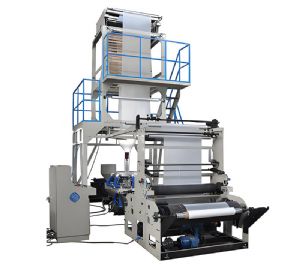
Blown Film Machine
Common issues and fixes: Bubble instability: check air ring, temperature, pressure. Thickness variation: check die bolts, cooling, screen. Seal defects: adjust temperature, pressure, dwell. Optimization: Use DOE to find optimal settings. Document final parameters. Energy efficiency: Measure and recommend improvements. Training: Operators on maintenance and troubleshooting. Handover: Document settings and procedures. In practice, the buyer should have a quality plan for the first production runs. In conclusion, advanced troubleshooting and optimization during commissioning ensure a rapid quality ramp-up and long-term performance.
