Advanced Tension Control and Nip Roll Maintenance for High-Speed Blown Film Lines 2026
In high-speed blown film lines (150-300 m/min), the haul-off unit operates under high loads, and nip roll maintenance is critical. The rubber cover on the nip rolls wears over time, becoming hard or developing flat spots, which reduces grip and causes speed fluctuations. The wear is accelerated by abrasive fillers (e.g., calcium carbonate) and by high nip pressures. The rubber cover should be inspected regularly; if it shows signs of glazing or hardness, it should be reground or replaced. The chrome roll should be inspected for scratches or pits. The nip roll pressure must be calibrated using a pressure gauge and a load cell; the calibration ensures that the indicated pressure matches the actual force. The pneumatic cylinders should be checked for leaks and the air supply should be clean and dry. In summary, nip roll maintenance is essential for high-speed lines. A worn nip roll causes slippage, leading to thickness variations and scrap. The operator should monitor the nip roll condition and replace the rubber cover every 1-2 years, depending on usage. The pressure calibration should be checked annually. In conclusion, advanced maintenance and tension control are key to reliable high-speed operation, ensuring consistent film quality and reducing unplanned downtime.
Tension control in the haul-off and winding sections is also critical. The tension should be consistent to prevent stretching or sagging. The tension is controlled by the nip roll speed and the winder's torque. A dancer roll or load cell provides feedback. The control system should compensate for roll diameter changes during winding. In practice, the operator should monitor the tension and adjust the winder's torque setpoint if the film is stretching or loose. In conclusion, advanced tension control and nip roll maintenance are essential for high-speed lines, ensuring consistent film quality and reducing defects.
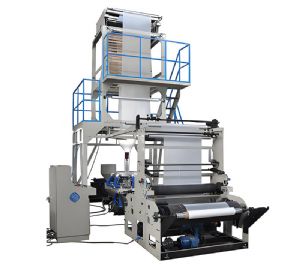
Blown Film Machine
Nip roll maintenance schedule: Daily: visual inspection for debris; wipe clean. Weekly: check pressure gauge and air supply. Monthly: inspect rubber cover for wear; measure hardness. Quarterly: check parallelism; adjust if needed. Annually: replace rubber cover; calibrate pressure sensors. Tension control: Use dancer roll or load cell for feedback. Adjust winder torque to maintain constant tension. Monitor for film stretching or sagging. In practice, the operator should keep a log of nip roll maintenance and tension settings. In conclusion, advanced tension control and nip roll maintenance are essential for high-speed blown film production, ensuring reliable operation and consistent film quality.
