Advanced Shear Heating and Cooling Dynamics in Blown Film Extruders 2026
In a blown film extruder, a significant portion of the heat required to melt the polymer comes from viscous dissipation (shear heating) due to the work done by the screw on the melt. As the screw rotates, the polymer is sheared between the screw flight and the barrel wall, generating heat. This shear heating is influenced by the screw speed, the flight clearance, and the viscosity of the melt. For high-viscosity resins (e.g., LLDPE, HDPE), shear heating can contribute 30-50% of the total heat input, reducing the need for external barrel heating. However, excessive shear heating can cause the melt temperature to exceed the degradation limit, leading to yellowing, gels, and black specks. Therefore, the screw design must balance shear and mixing. Barrier screws, with their secondary flight, reduce shear in the metering zone, lowering the melt temperature. The barrel cooling system is essential to remove excess heat; water cooling is more efficient than air cooling and is used on high-output lines. The cooling system must be responsive to changes in screw speed; as speed increases, more cooling is required. The cooling water temperature and flow rate are controlled by a valve; the control system adjusts the cooling based on the barrel zone temperatures. The die also experiences shear, but to a lesser extent; the die is usually heated to avoid heat loss, not cooled. In summary, shear heating is a double-edged sword: it helps melt the polymer but can also cause degradation if not properly managed. The screw design and the barrel cooling system must be optimized to maintain the melt temperature within the safe range. The operator must monitor the melt temperature and adjust the screw speed or cooling if it deviates.
The cooling capacity of the extruder must be sufficient to handle the maximum shear heating at the highest screw speed. This is typically determined during line design; the cooling system is sized for the worst-case scenario. The cooling water flow rate and temperature are controlled by a chiller or a cooling tower. The cooling system must be reliable; a failure can cause a rapid temperature rise and shut down the line. The cooling water should be treated to prevent scaling and corrosion, which reduce heat transfer. The barrel cooling can be zoned; each zone has its own solenoid valve to control the flow. The control system uses the zone temperature error to modulate the valve. In practice, the cooling is often set to maintain the zone temperatures; if the temperature rises, more cooling is applied. The screw's core cooling (if available) can also help remove heat from the screw center, but it is less common. In summary, managing shear heating requires a well-designed screw and a responsive cooling system. The operator must be aware of the relationship between screw speed and melt temperature; a sudden increase in speed should be accompanied by an increase in cooling. Regular maintenance of the cooling system, including cleaning of the heat exchanger, is essential. In conclusion, the dynamics of shear heating and cooling are central to melt temperature control. By understanding these mechanisms and implementing appropriate cooling strategies, converters can prevent overheating and maintain stable melt temperatures, ensuring high-quality film production.
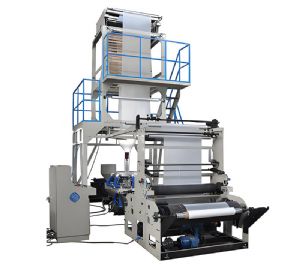
Blown Film Machine
Key factors influencing shear heating: – Screw speed: directly proportional to shear rate; higher speed = more heat. – Flight clearance: smaller clearance increases shear; wear increases clearance, reducing shear. – Viscosity: higher viscosity (e.g., LLDPE) generates more heat. – Compression ratio: higher compression increases shear. – Barrel temperature: lower barrel temperature increases melt viscosity, increasing shear heating. Cooling strategies: – Use water cooling for higher heat removal capacity. – Zone-specific cooling with solenoid valves. – Use a chiller to supply consistent cooling water temperature. – Consider using a cooling tower for efficiency. – Install flow meters to monitor cooling water flow. – Regularly clean barrel cooling passages. – Use a melt pump to reduce extruder backpressure, lowering shear. In practice, the extruder's cooling system is a critical component that must be maintained to ensure stable operation. The operator should monitor the melt temperature trend and adjust cooling if a rise is observed. By proactively managing shear heating, converters can avoid degradation and achieve consistent film quality.
