Advanced Sealing and Cutting Technologies in Tubular Film Lines for High-Speed Bag Making 2026
The sealing and cutting operations in a tubular film line are critical for producing strong, reliable bags at high speeds. The sealing process joins the bottom of the bag (and the sides for some styles) by melting the film layers together. The most common method is heat sealing, where a heated bar (or jaw) presses the film layers together for a set dwell time. The temperature, pressure, and dwell time must be optimized for the film material; too low a temperature results in a weak seal, too high causes burn-through. In high-speed lines, the seal bar moves with the film (e.g., rotary sealers) to allow sealing without stopping the film. Rotary sealers have a rotating drum with heated sealing elements that continuously seal the film as it passes. This allows speeds of up to 200 m/min. The sealing elements are typically made of Teflon-coated steel or brass to prevent sticking. The sealing pressure is applied by springs or pneumatics. The seal pattern can be continuous (for side-seal bags) or interrupted (for bottom-seal bags). Ultrasonic sealing is an alternative that uses high-frequency vibrations to generate heat through friction, without external heat. Ultrasonic sealing is faster, uses less energy, and is suitable for thinner films or heat-sensitive materials. It also produces cleaner seals with less distortion. However, ultrasonic equipment is more expensive and requires precise tuning. In summary, the choice of sealing technology depends on the film material, line speed, and budget. Heat sealing is mature and cost-effective; ultrasonic sealing offers advantages for specific applications.
Cutting operations separate the individual bags from the continuous tube. The cutting can be done by a rotary knife (for perforated bags) or a guillotine cutter (for stacks). For bags on rolls (e.g., trash bags), a perforating blade creates a tear-off line instead of a full cut. For individual bags (e.g., grocery bags), a guillotine cutter cuts the tube at the seal line after sealing. The cutting blades must be sharp and precisely timed with the sealing cycle. Dull blades cause ragged edges and dust, which can contaminate the film and cause sealing issues. The blade material is typically high-speed steel or carbide. The cutting mechanism must be synchronized with the line speed; any misalignment causes bag length variation. In high-speed lines, a rotary cutter with a helical blade provides continuous cutting with minimal impact. The cut quality is inspected visually; any burrs or jagged edges indicate the need for blade replacement. The control system must maintain the bag length by adjusting the cutter speed relative to the line speed. The use of servo-driven cutters allows precise control and quick changeover for different bag lengths. In summary, the sealing and cutting technologies are the final steps in the tubular film line, determining the bag's appearance and strength. Investing in high-quality sealing and cutting equipment, and maintaining it rigorously, is essential for producing consistent, defect-free bags. The trend is toward fully automated systems with vision inspection to detect seal and cut defects in real-time, removing faulty bags automatically. In conclusion, the tubular film line's sealing and cutting sections are as important as the extrusion section for producing marketable bags. Advances in sealing and cutting technology, such as ultrasonic sealing and servo-driven cutters, are enabling higher speeds and better quality, meeting the growing demands of the packaging industry.
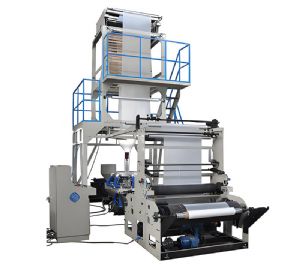
Blown Film Machine
Key sealing parameters: – Temperature: depends on film thickness and material; typically 130-180°C for PE. – Pressure: 2-5 bar, applied evenly. – Dwell time: 0.2-1.0 second, depending on speed. – Seal bar material: Teflon-coated steel or brass. – Cooling: to set the seal before cutting. Key cutting parameters: – Blade sharpness: must be sharpened regularly. – Timing: synchronized with sealing and line speed. – Blade material: carbide or high-speed steel. – Cut length: adjustable via servo. – Perforation depth: controlled by blade penetration. Quality checks: seal strength (peel test), seal appearance (no burn-through), bag length, and cut cleanliness. Regular maintenance: clean seal bars to prevent residue buildup; sharpen blades; check alignment. In conclusion, the sealing and cutting stations are the "finishing touch" of the tubular film line. Their proper operation ensures that the final bags are strong, consistent, and visually appealing, meeting customer specifications and reducing returns. By carefully selecting and maintaining these components, converters can achieve high efficiency and customer satisfaction.
