Advanced Seal Integrity and Recycled Material Processing in Trash Bag Lines 2026
Trash bag lines often use a significant percentage of recycled material (post-consumer or post-industrial) to reduce cost and environmental impact. However, recycled resin can contain contaminants (metals, dirt, other polymers) that degrade film properties and seal integrity. The extrusion line must have a robust filtration system (screen changer with fine mesh, e.g., 80-120) to remove contaminants. The screw and barrel must be wear-resistant to handle abrasive impurities. The melt temperature may need adjustment; recycled material often has a higher melt index, which can reduce seal strength. The bag machine's seal temperature and pressure must be optimized for the recycled blend; lower seal temperatures may be needed to avoid burning. The film's thickness uniformity is critical for consistent seals; AGC helps. The seal strength is tested regularly; a minimum peel strength (e.g., 2 N/15mm) is required. Additives like processing aids (e.g., fluoropolymer) can improve melt flow and reduce die buildup. In summary, processing recycled material in trash bag lines requires careful management of filtration, wear, and sealing parameters. The operator must monitor the film quality and seal strength frequently, adjusting the blend ratio if needed. The use of a high-quality reclaim system (with metal detection) is essential.
The seal integrity is also affected by the film's surface cleanliness; any dust or dirt on the seal area weakens the bond. The line should have an anti-static bar to reduce dust attraction. The seal bars must be cleaned regularly to prevent polymer buildup. The perforation quality affects bag separation; dull blades cause jagged tears. The line's speed can affect seal dwell time; at higher speeds, the dwell time is shorter, requiring higher temperature or pressure. The operator must balance speed and seal quality. In practice, the trash bag line often runs with a blend of 30-50% recycled content. The film's properties (tensile, tear) are lower than virgin, but acceptable for many applications. The line's profitability depends on the cost savings from recycled material versus the increased maintenance and quality control. In conclusion, seal integrity and recycled material processing are key challenges in trash bag lines. By optimizing filtration, sealing parameters, and process control, converters can produce reliable bags at lower cost while contributing to sustainability.
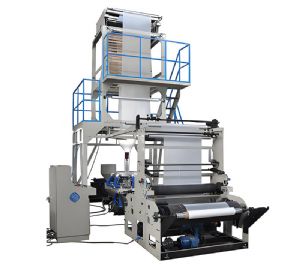
Blown Film Machine
Key considerations for recycled material: – Filtration: screen changer with 80-120 mesh. – Wear: bimetallic barrel, hardfaced screw. – Melt temperature: adjust for lower viscosity. – Seal optimization: lower temperature may be needed. – Additives: processing aids to improve flow. – Metal detection: in reclaim feed. – Quality checks: seal strength, tensile, tear. Seal integrity factors: – Temperature: must be high enough to melt, but not burn. – Pressure: even across seal area. – Dwell time: longer at lower speeds. – Cleanliness: seal bars and film surface. – Film thickness: uniform for consistent heating. – Material: recycled content reduces seal strength; adjust. In practice, the operator should run trials with different blend ratios to find the optimal balance of cost and performance. Regular seal strength testing is essential. In conclusion, advanced seal integrity and recycled material processing are critical for cost-effective trash bag production, requiring careful control of filtration, sealing parameters, and material blending.
