Advanced Safety Risk Assessment and Technical Documentation for CE Marking of Blown Film Lines 2026
The process of CE marking begins with a risk assessment (per EN ISO 12100) to identify all potential hazards associated with the machine's lifecycle – installation, operation, cleaning, maintenance, and disposal. Hazards include mechanical (moving parts, nip points), electrical (shock, fire), thermal (hot surfaces, molten polymer), and noise. The manufacturer must then design the machine to eliminate or reduce risks through inherent safety (e.g., guards, interlocks) and provide information (warnings, manuals). The risk assessment is documented in the technical file. The technical file also includes drawings, circuit diagrams, component certifications, and the Declaration of Conformity. In summary, CE marking requires a systematic safety approach. The manufacturer must involve experienced safety engineers. In conclusion, advanced risk assessment and technical documentation are essential for CE compliance, ensuring the machine is safe for operators and meets EU legal requirements.
For blown film lines, specific hazards include the nip rolls (which can entrap operators), the die (hot), and the winding unit. Safety measures include fixed guards with interlocks, emergency stop buttons at multiple locations, and two-hand controls for hazardous areas. The control system must have safety relays and comply with EN ISO 13849-1 (Performance Level). The manufacturer must also provide operating instructions in the official language of the user country. In practice, the buyer should request the technical file and verify that the machine is CE marked. In conclusion, advanced safety integration and documentation ensure that the blown film line is safe and compliant, protecting operators and the manufacturer from liability.
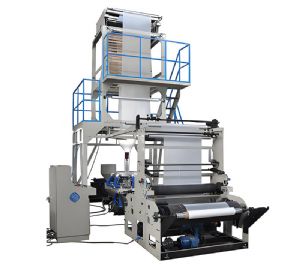
Blown Film Machine
Risk assessment steps: Identify hazards (mechanical, electrical, thermal). Estimate risk (severity, probability). Implement risk reduction measures. Verify residual risk. Document in technical file. Key safety features: Guards for moving parts. Interlocks for access. Emergency stops. Two-hand controls. Light curtains for sensitive areas. Technical file contents: Drawings, circuit diagrams. Component certifications (CE, UL). Risk assessment report. Declaration of Conformity. Operating instructions. In practice, the manufacturer should involve a notified body if the machine is high-risk. In conclusion, advanced safety risk assessment and documentation are fundamental to CE marking, ensuring the machine is safe for operation.
