Advanced Quality Assurance and Performance Testing for High-Speed Blown Film Lines 2026
Quality assurance (QA) for high-speed blown film lines begins at the manufacturing stage and culminates in factory acceptance testing (FAT) and site acceptance testing (SAT). The manufacturer should have a QA system that includes inspection of all components (screws, barrels, dies, gearboxes), electrical testing, and a pre-assembly run. The FAT is the critical milestone: the line is assembled at the manufacturer's facility, and the buyer's resin is run to verify performance. The test should measure output (kg/h) at the specified line speed, thickness uniformity (profile and average), bubble stability, and winder performance. The acceptance criteria should be defined in the contract: e.g., output within ±5% of target, thickness tolerance ±3%, scrap rate <2%, and line speed stability. The manufacturer should also demonstrate the automatic roll transfer and AGC response. The SAT is performed after installation at the buyer's site, confirming that the line performs identically under actual conditions. In summary, a robust QA and performance testing protocol ensures that the line meets specifications before final payment and reduces the risk of costly surprises. The buyer should have a clear acceptance test plan and involve their own technical team in the tests. In conclusion, thorough FAT and SAT are essential for high-speed lines, providing documented proof of performance and protecting the buyer's investment.
The performance testing should also include energy consumption measurement (kWh/kg) and noise levels. The manufacturer should provide a test report with all data. Any deviations from the acceptance criteria should be corrected before shipment or commissioning. The buyer should also test the line with different resins (if applicable) to ensure versatility. In practice, the FAT may take 1-2 weeks; the buyer should allocate sufficient time and resources. The SAT typically takes 1-3 weeks. The manufacturer's service engineers should be on-site for the SAT. In conclusion, a well-defined QA and performance testing process is a key part of the procurement of a high-speed line, ensuring that the delivered equipment meets the required performance and quality standards, enabling a smooth startup and rapid production ramp-up.
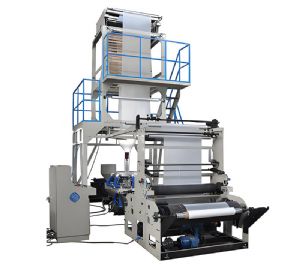
Blown Film Machine
FAT checklist: Output: measure kg/h at target speed and thickness. Thickness profile: average and variation (±3% target). Bubble stability: visual observation and pressure fluctuation. Winder transfer: automatic roll change, splice quality. AGC response: step change test, correction time. Energy consumption: kWh/kg. Safety: all interlocks functional. SAT checklist: Repeat FAT tests at site. Verify utility connections (power, water, air). Test with production resin and conditions. Verify operator training and documentation. Acceptance criteria: Defined in contract with tolerances. If not met, supplier must correct at no cost. In practice, the buyer should have a detailed test plan and involve their operators in the process. In conclusion, advanced QA and performance testing are vital for high-speed lines, ensuring they deliver the promised productivity and quality, and providing a basis for final acceptance and payment.
