Advanced Peelable Seal Layer Design and Adhesion Control in Medical Barrier Films 2026
Medical packaging often requires a peelable seal that provides a strong, intact seal during sterilization and handling, yet allows easy opening without particulate generation. The peelable seal is achieved by designing the sealant layer with a specific peel strength, typically 1-5 N/15mm, using a blend of polymers with controlled incompatibility. Common materials include blends of mLLDPE with PP or ionomers. The extrusion line must precisely control the seal layer thickness and composition; the seal layer extruder is often smaller. The seal strength is influenced by the seal temperature, pressure, and dwell time. The optimal seal window must be determined for each film structure. The seal must be consistent across the width; any variation causes opening failure. The film's seal strength is tested per ASTM F88. In summary, the peelable seal layer is a critical functional component of medical films. The line must be capable of producing a uniform seal layer with precise thickness and composition, and the operator must carefully control the sealing parameters during bag making (or the film is supplied to a converter who seals it). The film's peel strength must be validated for each sterilization method.
The peel mechanism is typically controlled by the phase separation of the blend components, creating a weak boundary layer. The selection of the blend ratio is crucial; too much incompatibility causes low seal strength, too little makes the seal too strong. The processing temperature must be carefully set to achieve the right morphology. The addition of processing aids may be needed to stabilize the blend. The seal layer's performance after sterilization is tested; gamma irradiation can cross-link the polymers, increasing seal strength. The film must be designed to meet the peel force spec after sterilization. In practice, the medical film line often produces master rolls that are converted (printed, sealed) by the customer. The line must provide detailed material and seal parameter recommendations. The quality control lab must have a reliable peel tester. In conclusion, advanced peelable seal layer design and adhesion control are essential for medical packaging, ensuring easy opening while maintaining sterility integrity.
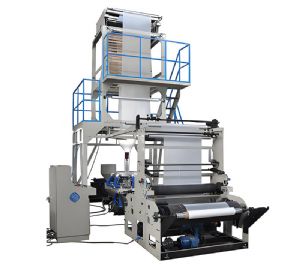
Blown Film Machine
Key seal layer materials: – mLLDPE/PP blends – Ionomers (e.g., Surlyn) – EVA blends – Copolymers with controlled incompatibility Seal parameters: – Temperature: 120-160°C – Pressure: 2-4 bar – Dwell time: 0.5-2 sec – Seal strength target: 1-5 N/15mm – Peel type: clean peel (no strings or delamination) Quality tests: – Peel strength (ASTM F88) – Seal integrity (leak test) – Sterilization compatibility (post-sterilization peel) – Visual inspection for defects Process control: – Extruder temperature: within blend stable range. – Layer thickness: uniform via AGC. – Feed rates: accurate for blend ratio. – Regular calibration of seal tester. In practice, the line must be validated for the specific seal layer formulation. The operator must monitor the film's peel strength and adjust the blend ratio if needed. In conclusion, peelable seal layer design is a sophisticated aspect of medical film extrusion, requiring precise control of material blending, processing, and sealing parameters to meet the demanding requirements of healthcare packaging.
