Advanced Multi-Layer Stretch Wrap Extrusion for Cling and Slip Control 2026
Modern stretch wrap films are often multi-layer (3 or 5 layers) to provide different functionalities: a cling layer (for hand wrap), a slip layer (for machine wrap), and a structural core. The cling layer contains the tackifier (PIB) and is typically on the outside. The slip layer contains slip agents (e.g., erucamide) to reduce friction for easy unwinding. The core layer provides strength and puncture resistance. The 3-layer structure is A/B/A or A/B/C. The tie layers are not needed if all layers are PE-based. The extrusion line must have separate extruders for each layer, with the cling and slip extruders being smaller. The die is a feed block or multi-manifold type. The layer ratios are optimized: cling layer 10-20%, core 60-80%, slip layer 10-20%. The processing temperatures must be compatible; the tackifier is sensitive to high temperatures, so the cling layer extruder is set lower (190-200°C). The core extruder runs at 200-220°C for HMW-LLDPE. The die temperature is a compromise. In summary, multi-layer stretch wrap allows independent control of cling and slip, improving performance for both hand and machine applications. The line must be capable of co-extrusion with precise layer ratio control. The operator must monitor the layer thickness distribution (NIR) and adjust extruder speeds to maintain the target ratios.
The cling additive (PIB) migration is a key factor; it takes time to migrate to the surface, so the film should be stored for 24-48 hours before use to develop full cling. The slip agent (erucamide) also migrates but to the opposite surface if the film is wound with the cling layer inside. The layer configuration must consider this: for hand wrap, the cling layer is on the outside; for machine wrap, the cling is on the inside (against the load) and the slip is on the outside. The line's winding configuration can orient the film accordingly. The film's performance is tested for cling, slip, and puncture. In practice, the multi-layer stretch wrap line is more expensive but offers product differentiation. The operator must manage the different additive migration behaviors. In conclusion, multi-layer stretch wrap extrusion is a key technology for producing high-performance pallet wrap with tailored cling and slip properties for specific end-use applications.
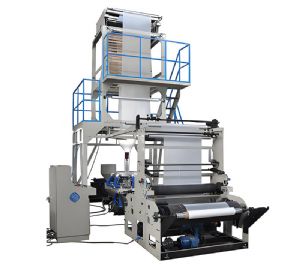
Blown Film Machine
Key layer structures: – 3-layer: cling/core/slip (or cling/core/cling for hand wrap). – 5-layer: cling/tie/core/tie/slip (for enhanced adhesion if different polymers). – Materials: HMW-LLDPE (core), mLLDPE (cling), LDPE (slip). Additives: – Cling layer: PIB tackifier (1-3%). – Slip layer: erucamide (0.1-0.5%). – Core: stabilizers. Process: – Extruder temperatures: cling 190-200°C, core 200-220°C, slip 190-200°C. – Die: feed block or multi-manifold. – Layer ratio control via NIR. – BUR: 3.0-4.0. – Line speed: 150-250 m/min. Quality tests: – Cling force (after 24h storage). – Coefficient of friction (slip). – Puncture resistance. – Tensile and tear. In practice, the cling layer extruder must be cleaned regularly to prevent PIB buildup. The film should be stored in a cool place to control migration. In conclusion, multi-layer stretch wrap extrusion offers precise control of cling and slip, enabling high-performance films that meet diverse logistics needs.
