Advanced Medical Grade Barrier Film Extruder: Cleanroom Design and Sterilization Compatibility 2026
A medical grade barrier film extruder is a highly specialized blown film line that produces films used in sterile medical packaging, such as pouches for surgical instruments, catheters, and pharmaceutical blister packs. These films must provide an effective microbial barrier, be biocompatible (ISO 10993), and withstand sterilization methods (ethylene oxide, steam, gamma irradiation). The line must operate in a cleanroom environment (Class 7 or better) to prevent contamination. The extruder barrels and screws are made of high-grade stainless steel to avoid corrosion and contamination. The resins used are ultra-pure, with low extractables, and are typically multi-layer co-extrusions (5 or 7 layers) combining a sealant layer (e.g., mLLDPE or PP), a barrier layer (EVOH or PA), and an outer layer for puncture resistance. The die is a multi-manifold type with precise temperature control for each layer. The cooling air is filtered, and the entire line is enclosed. The thickness gauge and AGC ensure uniform thickness, critical for seal integrity. The line speed is moderate (50-100 m/min) to maintain quality, with outputs of 100-300 kg/h. In summary, the medical film extruder is a cleanroom-compatible, precision line that produces films meeting strict medical standards. The operator must wear cleanroom garments and follow strict hygiene protocols. The line must be validated for each product, and the process parameters are fixed. Regular environmental monitoring (particle count, air quality) is mandatory.
Sterilization compatibility is a key requirement. The film must not degrade under ethylene oxide (EO) gas, steam (121°C), or gamma radiation (up to 50 kGy). The barrier layer (EVOH or PA) must maintain its integrity after sterilization. The sealant layer must provide a strong, peelable seal that remains intact after sterilization. The film's properties are tested after sterilization: seal strength, OTR, and WVTR must remain within specifications. The line's process must avoid any degradation that could generate cytotoxic compounds. The use of stabilizers that are compatible with sterilization is essential. In practice, the medical film line is often validated with a specific sterilization method. The operator must ensure the film's color, clarity, and mechanical properties are unchanged after sterilization. Regular validation and re-validation are required. In conclusion, the medical grade barrier film extruder is a critical tool for healthcare packaging, combining cleanroom manufacturing, barrier technology, and sterilization compatibility to produce films that protect medical devices and pharmaceuticals.
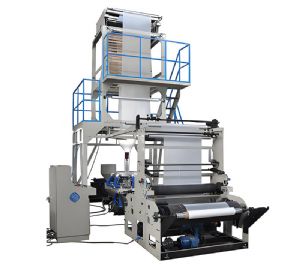
Blown Film Machine
Key requirements: – Cleanroom: Class 7 (ISO 14644) or better. – Materials: ultra-pure, FDA-listed, biocompatible (ISO 10993). – Barrier: OTR <10 cc/m²/day, WVTR <1 g/m²/day. – Sterilization: EO, steam, gamma compatible. – Seal integrity: peelable seal with consistent strength. – Thickness: 50-200 µm. – Width: up to 1.5 m. Process parameters: – Melt temperature: 190-240°C (depending on layer). – BUR: 2.0-3.0. – Line speed: 50-100 m/min. – Cooling: filtered air + IBC. – Drying: for PA and EVOH (dew point -40°C). – AGC: tight tolerance (±3%). Quality control: – OTR, WVTR testing. – Seal strength (peel and burst). – Biocompatibility testing (cytotoxicity, sensitization). – Sterilization validation. – Pinhole testing. In practice, the line must have a validated cleaning and changeover procedure. The operator must be trained in cleanroom behavior. In conclusion, the medical grade barrier film extruder is a high-investment, high-return line that enables the production of critical healthcare packaging, demanding meticulous control and compliance.
