Advanced Materials Handling and Downstream Integration in Plastic Film Extrusion Lines 2026
Modern plastic film extrusion lines extend beyond the basic extruder-to-winder configuration; they include sophisticated upstream material handling systems and downstream converting equipment to create a fully automated production cell. The upstream system begins with resin storage silos, which feed into gravimetric blenders that mix virgin resin, masterbatch, and reclaim in precise ratios. The blended material is then conveyed to a drying system (for hygroscopic resins) before entering the extruder hopper. The entire material handling chain is controlled by a central computer that monitors inventory levels and automatically orders resin when stocks are low. This integration reduces labor and ensures consistent material quality. The downstream integration often includes in-line slitting, where the film is slit to customer widths immediately after winding, eliminating a separate slitting operation. Some lines include a bag-making machine directly after the winder, producing finished bags in a single pass. This is common for grocery bags and trash bags. The bag-making section includes a folding board, sealing bars, and a perforating/cutting unit, all synchronized with the extrusion line speed. The finished bags are then stacked and packed into cartons by robotic palletizers. This level of integration requires precise coordination and robust control systems, but it dramatically reduces labor costs and lead times. The line's control system must be capable of managing not only the extrusion parameters but also the converting parameters, such as seal temperature, bag length, and stack count. The integration also extends to quality control: in-line vision systems inspect the film for defects and automatically reject faulty sections. In summary, the modern plastic film extrusion line is a fully automated manufacturing cell that transforms resin pellets into finished products with minimal human intervention, maximizing efficiency and consistency.
The integration of reclaim systems is a key aspect of downstream integration. Edge trim from the slitter or bag maker is pneumatically conveyed back to a granulator, where it is ground into flake and fed into a reclaim extruder (or back to the main extruder's feed). The reclaim rate must be carefully controlled to avoid degrading the film's properties. Advanced lines use a "continuous reclaim" system that matches the reclaim feed to the trim generation, ensuring a steady state. The reclaim flake is often mixed with virgin resin in the blender, but for high-quality films, it is fed to a separate extruder and used in the core layer. The integration also includes a scrap management system that collects and regrinds start-up scrap and off-spec rolls. The entire downstream area is designed for minimal operator intervention; automated roll handling (shaftless chucks, robotic arms) and packaging (stretch wrapping, labeling) are common. The line's efficiency is further enhanced by predictive maintenance: sensors on all motors and bearings provide data to a cloud-based system that forecasts failures. In summary, the integration of upstream and downstream processes transforms the plastic film extrusion line into a "factory in a box" capable of producing finished goods with unparalleled efficiency. This trend is driven by the need to reduce labor costs, improve quality, and shorten delivery times. For converters, investing in such integrated lines is a strategic move to remain competitive in a global market. In conclusion, the plastic film extrusion line has evolved from a simple extrusion system to a comprehensive production platform. The integration of materials handling, extrusion, converting, and packaging creates a seamless workflow that maximizes output and minimizes waste. As technology advances, the level of automation will only increase, with artificial intelligence and machine learning further optimizing the process and enabling true lights-out manufacturing.
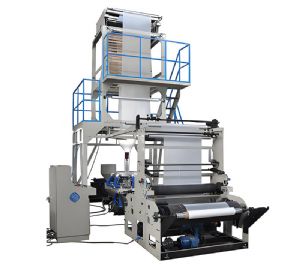
Blown Film Machine
Key integration considerations: Material handling capacity must match extruder consumption, with surge bins to smooth fluctuations. Drying system must provide sufficient residence time for hygroscopic resins. In-line slitting requires the winder to be equipped with slitter knives and a rewind station for each slit strip. In-line bag making requires the line speed to be synchronized with the bag machine's cycle time; typically, the bag machine operates at the same speed as the extrusion line, but if not, a festoon accumulator is used to decouple speeds. Quality control systems (vision, gauge) must provide real-time feedback to the extrusion and converting sections. The control system must have a user-friendly interface that allows operators to monitor the entire line from a single HMI. The integration also requires careful layout planning to minimize material handling distances and ensure safety. In conclusion, the plastic film extrusion line is a complex but powerful system that, when properly integrated, delivers significant competitive advantages. The key to success is to design the line with integration in mind from the start, selecting components that are compatible and have open communication protocols (e.g., OPC UA). This ensures that the line can evolve with future upgrades and continue to deliver high performance.
