Advanced Lamination and Sealing Technologies in Bubble Film Machines for Superior Protection 2026
The lamination and sealing steps in a bubble film machine are critical for ensuring that the air trapped in the bubbles remains contained. The process typically involves bringing together the profiled bubble layer and the flat base layer, then applying heat and pressure to bond them. The sealing can be achieved by heat sealing (fusion bonding) or by using an adhesive (either applied in-line or pre-coated). Heat sealing is more common because it eliminates the need for adhesives and is faster. The heat sealing process requires that both layers are at a temperature above their sealing initiation temperature but below their melt temperature. The nip rolls apply pressure to squeeze the two layers together, while a heating element (e.g., a hot bar or heated roll) supplies the thermal energy. The seal must be continuous around each bubble to prevent air leakage. The seal width (the area of contact) is typically 1-3 mm. The sealing temperature and pressure must be optimized for the specific resin; for LDPE, typical sealing temperature is 130-150°C, pressure 2-4 bar, and dwell time 0.5-2 seconds. The dwell time is limited by the line speed; higher speeds require higher temperatures or longer heated rolls to achieve the same energy input. The sealing quality is tested by measuring the air retention rate – a sample is placed under load, and the loss of bubble height is measured over time. A good seal retains >95% of air after 24 hours. The lamination also affects the film's mechanical properties; the bond must be strong enough to withstand tension during winding and use. In summary, the sealing process is the "make-or-break" step in bubble film production; a poor seal results in flat bubbles and a useless product.
Advanced bubble film machines use a multi-zone sealing system to ensure uniform bonding across the entire width. The sealing rolls may have a patterned surface to match the bubble pattern, providing localized heating and pressure only where needed. This reduces the heat input to the bubbles themselves, minimizing distortion. The sealing rolls are often coated with a non-stick material (e.g., PTFE) to prevent sticking. The machine also includes a cooling section after sealing to set the seal before winding. For double bubble films, two sealing steps are required: first, the inner bubble layer is sealed to the inner base layer, then the outer bubble layer is sealed to the outer base layer. The alignment of the two bubble patterns is critical; any misregistration causes aesthetic defects. The machine's control system monitors the sealing temperature and pressure continuously, adjusting them to compensate for variations in line speed or film thickness. The use of infrared sensors on the sealing rolls provides real-time temperature feedback. In some high-end machines, the sealing is done with ultrasonic energy, which is faster and more energy-efficient, but it requires specialized equipment and is more expensive. Ultrasonic sealing works well for thin films and is less affected by contaminants. In summary, the sealing technology in bubble film machines has evolved to deliver faster speeds and more reliable seals. The choice of sealing method depends on the film material, the required output, and the investment budget. For biodegradable resins, which have narrower sealing windows, precise temperature control is even more critical. In conclusion, the lamination and sealing steps are the heart of bubble film production, determining the product's functionality and reliability. Converters must invest in high-quality sealing systems and maintain them rigorously to ensure consistent air retention and customer satisfaction.
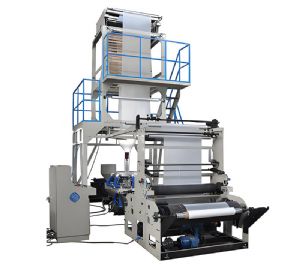
Blown Film Machine
Key sealing parameters: Sealing temperature – must be high enough to melt the surfaces but low enough to avoid bubble collapse. Sealing pressure – must be uniform across the width; any variation causes weak spots. Dwell time – determined by line speed and roll length; longer dwell improves seal but reduces speed. Cooling – rapid cooling after sealing sets the seal and prevents re-melting. For adhesive bonding, the adhesive must be compatible with both film layers and have a sufficient pot life. The adhesive application method (e.g., gravure roll, spray) must provide uniform coating. The lamination nip pressure and temperature must be controlled to ensure bubble sealing without crushing. The film's surface tension (dyne level) affects adhesive wetting; if too low, the adhesive may not bond. In conclusion, the lamination and sealing process is a delicate balance of heat, pressure, and time. It requires careful setup and continuous monitoring to produce bubble film that meets the stringent requirements of protective packaging. Regular maintenance of the sealing rolls and replacement of worn parts are essential to prevent seal failures. With proper operation, a bubble film machine can produce high-quality cushioning film that protects products during shipping and handling.
