Advanced LDPE/LLDPE Film Extruder: Processing Versatility for Flexible Packaging 2026
LDPE and LLDPE are the most widely used resins in blown film, offering a combination of flexibility, clarity, and toughness. An extruder designed for these resins must be versatile, as the blends can vary from 100% LDPE (for high clarity) to 100% LLDPE (for high strength) or any ratio in between. The screw design is typically a barrier type with a compression ratio of 2.5-3.5:1, suitable for the shear-thinning behavior of both resins. The barrel temperature profile is moderate: feed zone 150-170°C, compression 180-200°C, metering 190-210°C. The die temperature is similar. The processing window is wide, allowing adjustments for different blends. The key challenge is balancing clarity (from LDPE) and strength (from LLDPE). Higher LDPE content increases clarity and gloss but lowers tear strength; higher LLDPE increases strength but may reduce clarity and increase haze. The BUR is typically 2.5-3.5, providing a good balance. The cooling rate can be adjusted to optimize clarity; faster cooling improves clarity. In summary, the LDPE/LLDPE extruder is the workhorse of the flexible packaging industry, capable of producing a wide range of films from shrink wrap to stretch film. Its versatility comes from the wide processing window and the ability to adjust blend ratios and process parameters. The operator must be familiar with the effects of blend ratio on film properties and adjust accordingly. The machine is relatively simple to operate compared to barrier lines, making it a popular choice for converters.
The optimization of LDPE/LLDPE blends involves adjusting the blend ratio to meet specific product requirements. For example, shrink film may use 70% LDPE and 30% LLDPE for high clarity and good shrink; stretch film may use 80% LLDPE with 20% LDPE for high strength and cling. The screw must homogenize the blend; a mixing section is recommended. The melt temperature is set based on the blend; higher LLDPE content may require slightly higher temperature to reduce viscosity. The BUR is adjusted to achieve the desired orientation: higher BUR for strength, lower for clarity. The cooling is adjusted to control haze; faster cooling reduces haze. The thickness gauge and AGC maintain uniformity. In practice, the line often runs multiple products, so changeover time is important. Quick-change screen packs and purge compounds are used to minimize downtime. The operator must monitor the film properties and adjust the blend ratio if the raw material changes. In summary, the LDPE/LLDPE extruder is a flexible platform for producing a wide variety of films. Its optimization is a continuous process of balancing clarity, strength, and cost. With proper management, it can serve a broad market. In conclusion, the
LDPE/LLDPE film extruder is the most common type in the industry, offering the versatility needed for the diverse demands of flexible packaging. Its simplicity and reliability make it a cornerstone of blown film production.
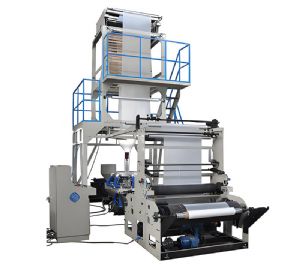
Blown Film Machine
Key blend ratios and applications: – 100% LDPE: high clarity, good shrink, moderate strength; used for shrink wrap and lightweight bags. – 70/30 LDPE/LLDPE: balanced clarity and strength; common for general packaging. – 50/50: good strength with moderate clarity; used for agricultural mulch. – 30/70 LDPE/LLDPE: high strength, moderate clarity; used for heavy-duty bags and stretch film. – 100% LLDPE: maximum strength, lower clarity; used for stretch film and liners. Key process parameters: – Melt temperature: 180-220°C, depending on blend. – BUR: 2.5-3.5. – Frost line height: 400-600 mm. – Cooling: ambient or chilled air. – Line speed: up to 250 m/min for thin films. Troubleshooting: – High haze: increase cooling or reduce BUR. – Low tear: increase LLDPE content or BUR. – Bubble instability: reduce LLDPE content or add LDPE. – Gauge bands: check air ring and die temperature. In practice, the operator must adjust the blend ratio based on raw material cost and product requirements. The line's flexibility is its greatest asset. In conclusion, the LDPE/LLDPE extruder is a versatile tool that can produce a wide range of films, making it the most common line in the industry.
