Advanced Inspection and Valuation of Used / Second-Hand Film Blowing Equipment 2026
Purchasing used blown film equipment can offer substantial cost savings (30-60% of new price), but it carries risks of hidden wear, obsolescence, and lack of warranty. A thorough inspection is essential. The most critical component is the extruder: the screw and barrel wear determines the machine's remaining life and output capability. The screw should be pulled out for inspection (if possible) to measure flight diameter and check for scoring or cracking. The barrel bore should be measured with a bore micrometer to check for ovality and wear. A clearance (barrel bore - screw flight) of >0.5-1.0 mm indicates significant wear; reconditioning may be needed. The gearbox should be checked for noise, oil condition, and bearing play. The die should be inspected for scratches (die lines), temperature zone functionality, and thermal bolt operation. The air ring should be checked for dents or corrosion. The electrical panel should be inspected for burnt components, and the PLC battery life checked. In summary, a systematic inspection, ideally with the help of a specialist, is mandatory before buying used equipment. The seller should allow access for inspection and a test run. The test run should produce film to verify output and quality. The buyer should also check the maintenance records to assess the machine's history.
Valuation of used equipment: The price should reflect the remaining life and the cost of any necessary refurbishment. A good rule of thumb: used price = new price × (remaining life / total life) - refurbishment cost. For a 10-year-old line with 5 years of life left, new price $500k, refurbishment $50k, used value ≈ $500k × (5/15) - $50k = $167k - $50k = $117k. However, market demand and brand influence pricing; European brands (Reifenhäuser, Windmöller) hold value better. The buyer should also factor in the cost of transportation, installation, and potential upgrades (e.g., new control system). In practice, many used equipment dealers offer a warranty (e.g., 3-6 months) on refurbished lines. The buyer should negotiate the price based on the inspection findings. In conclusion, buying used equipment can be a smart financial move if the inspection is thorough and the price reflects the condition and remaining life. It is especially suitable for converters with limited capital or those needing a backup line.
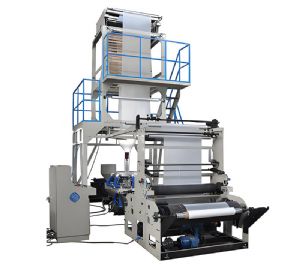
Blown Film Machine
Inspection checklist: Extruder: pull screw, measure flight diameter and barrel bore; check for scoring. Gearbox: listen for noise, check oil for metal particles, measure bearing play. Motor: check insulation resistance, run current. Die: inspect lip for scratches, test all heating zones, check bolt heaters. Air ring: check for damage, test blower. Controls: check PLC function, HMI, sensors. Winder: check roll alignment, tension control. Test run: run with resin, measure output, thickness uniformity, and film quality. Valuation factors: Brand and age. Remaining life based on condition. Refurbishment cost: new screw/barrel, die repair, control upgrade. Market demand for that type of line. Location and shipping cost. In practice, the buyer should engage a third-party inspector for high-value purchases. In conclusion, advanced inspection and valuation of used equipment are essential to avoid costly mistakes and ensure the investment is sound.
