Advanced Hopper Drying and Material Conveying for Hygroscopic Resins (PA/EVOH) 2026
Polyamide (PA) and ethylene vinyl alcohol (EVOH) are hygroscopic resins that absorb moisture from the atmosphere, which must be removed before processing to prevent hydrolysis, which causes degradation, gels, and poor mechanical properties. A proper hopper drying and material conveying system is essential. The drying system typically consists of a desiccant dryer (with a molecular sieve bed) that supplies dehumidified hot air (dew point of -40°C or lower) to the hopper, where the resin is heated (PA: 80-120°C; EVOH: 80-100°C) for several hours to drive off moisture. The residence time in the hopper must be sufficient – typically 2-4 hours at the recommended temperature. The dried resin must be conveyed to the extruder hopper without picking up moisture; therefore, the conveying system should use closed-loop drying air or be equipped with a dehumidifying hopper loader. The dryer's capacity must match the extruder's consumption – e.g., for 300 kg/h, the dryer must be rated for at least that capacity with adequate drying time. The hopper is usually insulated and has a level sensor to ensure continuous material flow. In summary, hopper drying and conveying are critical for processing PA and EVOH. The operator must monitor the dryer's dew point and temperature, and ensure the hopper is properly sized. In conclusion, advanced drying systems are essential for producing high-quality barrier films with PA and EVOH.
The drying process must be carefully controlled: if the temperature is too high, the resin may degrade; if too low, moisture remains. The dew point should be continuously monitored; a rise indicates that the desiccant needs regeneration or replacement. The conveying system should be sealed to prevent moisture pickup; using dry air (from the dryer) as the conveying medium is recommended. In practice, the operator should check the moisture content of the dried resin using a Karl Fischer test; the moisture should be below 0.05% for PA and 0.1% for EVOH. Regular maintenance of the dryer (cleaning the hopper, replacing desiccant) is essential. In conclusion, advanced hopper drying and conveying systems are critical for successful processing of hygroscopic resins, ensuring melt quality and film performance.
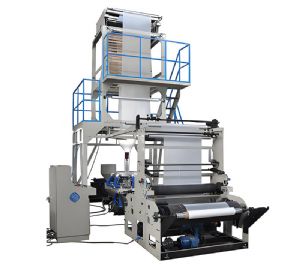
Blown Film Machine
Key parameters: Drying temperature: PA 80-120°C; EVOH 80-100°C. Dew point: below -40°C. Residence time: 2-4 hours. Moisture target: PA <0.05%, EVOH <0.1%. Dryer capacity: match extruder consumption. Conveying: use dry air to prevent moisture pickup. Hopper: insulated, with level sensor. Maintenance: Clean hopper regularly. Replace desiccant when dew point rises. Calibrate temperature sensors. In practice, the operator should monitor the dryer's display for any alarms. In conclusion, advanced hopper drying and conveying are essential for high-quality barrier film production with PA and EVOH.
