Advanced Extruder Screw Wear: Mechanisms, Measurement, and Reconditioning Strategies 2026
Extruder screw wear is an inevitable consequence of processing polymers, especially those with fillers (CaCO3, talc), recycled material (with contaminants), or high-viscosity resins. The primary wear mechanism is abrasion, where hard particles (metal fragments, glass, mineral fillers) erode the screw flights and barrel wall. Corrosion can occur when processing materials that release acidic byproducts (e.g., PVC, fluoropolymers). Fatigue can cause cracking in the screw root if the screw is subjected to cyclic stress. The wear increases the flight clearance (the gap between the screw flight tip and the barrel), allowing melt to leak backwards (backflow), reducing output and increasing melt temperature. The wear is typically most severe in the compression and metering zones, where the pressure and temperature are highest. To measure wear, the most practical method is the output test: run the extruder at a fixed screw speed and measure the output (kg/h); compare to the baseline output when new. A decline of >5% indicates significant wear. More precise is direct measurement: pull the screw and use a micrometer to measure the flight diameter at multiple points; compare to the original diameter. A clearance (barrel bore - screw flight diameter) of >0.5-1.0 mm (depending on screw size) indicates the need for reconditioning. In summary, monitoring output is a simple, ongoing check; direct measurement during scheduled maintenance provides accurate data.
Reconditioning a worn screw involves building up the worn flight surfaces with a hardfacing alloy (e.g., tungsten carbide, Stellite, Colmonoy) using plasma transfer arc (PTA) welding, then grinding the screw back to its original diameter. The process restores the clearance and recovers output and melt quality. The cost of reconditioning is typically 30-50% of a new screw, and the reconditioned screw may have better wear resistance if a harder alloy is used. The barrel, if worn, can be honed or sleeved. The reconditioning process also allows for design modifications (e.g., adding a mixing section). The turnaround time is 1-3 weeks; keeping a spare screw minimizes downtime. In practice, the decision to recondition or replace depends on the cost and the screw's remaining life. For severe wear (clearance >1.5 mm), replacement may be more cost-effective. In conclusion, understanding wear mechanisms and using output monitoring and direct measurement allows for timely reconditioning, maintaining extruder performance and extending equipment life.
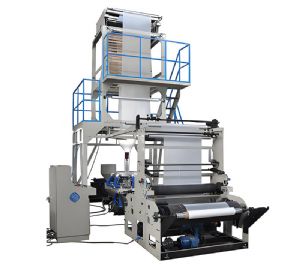
Blown Film Machine
Wear mechanisms: Abrasion: from fillers, recycled metal, glass fibers. Corrosion: from acidic degradation products (e.g., HCl from PVC). Fatigue: from cyclic stress, causing cracks. Erosion: from high-velocity melt at die entrance. Measurement methods: Output test: run at fixed RPM, compare kg/h to baseline. Direct measurement: pull screw, measure flight diameter with micrometer. Pressure test: measure melt pressure at fixed output; higher pressure indicates wear. Visual inspection: look for scoring, pitting, or rounding of flight edges. Wear limits: Clearance >0.5-1.0 mm for 90-150 mm screws indicates reconditioning needed. Output decline >5% at same RPM. Melt temperature increase without setpoint change. Reconditioning steps: 1) Clean screw (burn-off or caustic bath). 2) Inspect and measure wear. 3) Hardface flights via PTA welding. 4) Grind to original diameter and polish. 5) Inspect barrel; hone if needed. 6) Reinstall and run-in. Benefits of reconditioning: Restores output and melt quality. Lower cost than new screw. Can improve wear resistance. Allows design upgrades. In practice, the operator should track output trends weekly. When output drops, schedule screw pull-out. Regular reconditioning every 2-3 years is typical for high-volume lines. In conclusion, proactive screw wear management is essential for maintaining extruder efficiency and product quality, making reconditioning a cost-effective strategy.
