Advanced Evaluation of Cheap / Affordable Blown Film Extruders: Quality vs. Cost Trade-offs 2026
Affordable blown film extruders, typically from Chinese or Indian manufacturers, offer a low entry cost for new converters or limited budgets. Prices for a basic single-layer line (45-65 mm extruder, manual controls) can be as low as $30,000-$50,000. However, these machines often have trade-offs in component quality, precision, and longevity. The extruder screw may be a general-purpose design (not optimized for specific resins), with a lower L/D ratio (24-26:1) and less effective mixing. The barrel may be nitrided steel rather than bimetallic, reducing wear resistance. The gearbox may have lower torque capacity and shorter bearing life. The die may have fewer heating zones and less precise temperature control, leading to gauge variations. The control system may be relay-based or a basic PLC with limited functionality. The winder may be manual or semi-automatic. In summary, affordable machines are suitable for undemanding applications (e.g., simple bags, liners) where tight tolerances are not critical, but they may not meet the needs of high-quality or high-speed production. Buyers should assess their product requirements and choose a machine that meets them without overpaying for features they don't need.
To evaluate an affordable machine, the buyer should request a detailed specification list and compare it to a mid-range machine. Key components to check: screw material and design, barrel liner, gearbox brand, heater band type and count, die heating zones, air ring type, blower motor brand, gauge type (if any), winder type, and PLC brand. Also, inquire about the warranty and after-sales support. Many affordable suppliers offer limited support, so the buyer should have in-house maintenance capability. The buyer should also consider the total cost of ownership: a cheaper machine may have higher energy consumption, more frequent maintenance, and higher scrap rates, offsetting the initial savings. In practice, it is advisable to visit the manufacturer's factory and see the machine running, or ask for a video demonstration. Request references from other users. In conclusion, affordable blown film extruders can be a viable entry point, but careful evaluation of quality, performance, and support is essential to avoid costly surprises. The buyer should balance price with the expected production requirements and quality standards.
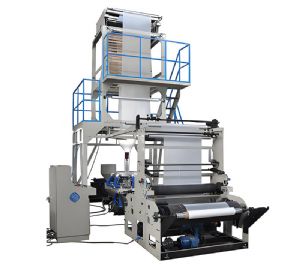
Blown Film Machine
Key components to inspect: Extruder: screw material (nitrided or hardfaced), L/D ratio, compression ratio. Barrel: nitrided or bimetallic, wear resistance. Gearbox: brand, torque rating, bearing type. Die: number of heating zones, material (tool steel), gap adjustment. Air ring: single or dual lip, vane adjustability. Blower: brand, VFD or fixed speed. Gauge: if included, type (manual or online), accuracy. Winder: surface or center, manual or automatic tension. Controls: PLC brand, HMI, number of I/O. Warranty: usually 12 months for affordable lines. After-sales: availability of spare parts, remote support. Cost trade-offs: Cheaper machine: lower initial cost, but higher energy, maintenance, scrap. Mid-range: higher cost, but better efficiency, less downtime, better quality. Buyer should calculate breakeven: if cheap machine costs $50k but operating cost is $10k/year more, over 5 years it costs $100k total; mid-range costs $100k but operating cost $5k/year less, total $125k – so cheap may be better if budget is tight. But also consider product quality and customer requirements. In practice, many converters start with affordable lines and upgrade as they grow. In conclusion, affordable blown film extruders are a valid option for entry-level applications, but due diligence and realistic expectations are key.
