Advanced Energy-Efficient Technologies in Plastic Extrusion Machinery for Sustainable Film Production 2026
Energy consumption is a major operating cost for plastic extrusion machinery, and with rising energy prices and environmental regulations, energy efficiency has become a key design criterion. Modern extrusion machinery incorporates several technologies to reduce energy use. The most significant is the use of high-efficiency motors (IE3 or IE4) with VFDs, which can save 10-20% compared to standard motors. The VFDs allow the motor to operate at the optimal speed for the process, avoiding unnecessary energy use. The extruder's barrel insulation reduces heat loss to the environment, saving 5-10% of heating energy. The use of ceramic heater bands (which have better thermal efficiency than mica bands) also contributes. The cooling system can be optimized by using variable-speed pumps and fans that match the cooling demand. Heat recovery is another important technology: the heat from the barrel cooling water (typically 40-60°C) can be used to preheat the drying air for hygroscopic resins, or for space heating in winter. The air ring blower's exhaust air, which is warm and dry, can also be used for drying or heating. The chiller's condenser heat can be recovered for process water preheating. In addition, the screw design can be optimized for energy efficiency: a barrier screw that improves melting can reduce the required screw speed and thus the motor power. The use of a melt pump reduces the extruder's backpressure, lowering the motor load. In summary, energy-efficient technologies in plastic extrusion machinery are not only environmentally friendly but also economically beneficial, with payback periods typically under 2 years.
Beyond component efficiency, the overall process optimization can significantly reduce energy consumption. Running the line at the optimal speed (which balances output and quality) can reduce energy per kg. For example, running at 80% of maximum speed may use 90% of the energy, but the output is 20% lower, increasing energy per kg. Therefore, it is often more efficient to run at maximum speed if quality allows. The use of advanced process control (APC) can also save energy by maintaining stable conditions and avoiding waste. The energy management system (EMS) can monitor consumption and identify inefficiencies, such as a worn screw that requires more power to achieve the same output. The EMS can also schedule production to take advantage of lower electricity tariffs. The machinery's design should also consider the material's energy footprint; using recycled content can reduce the overall energy per kg, as less energy is needed to produce the raw material. However, recycled material may require more energy to process due to impurities. Therefore, a life cycle assessment (LCA) is recommended. In summary, energy efficiency in plastic extrusion machinery is a multi-faceted approach that includes hardware selection, process optimization, and operational practices. The trend toward "eco-design" is driving manufacturers to innovate, resulting in machinery that is both productive and sustainable. In conclusion, energy efficiency is no longer a "nice-to-have" but a competitive necessity. Converters who invest in energy-efficient extrusion machinery will benefit from lower operating costs, reduced environmental impact, and improved public image. The technology is available and cost-effective; the challenge is to implement it systematically.
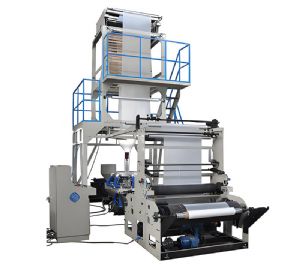
Blown Film Machine
Key energy-saving measures: – IE3/IE4 motors with VFDs. – Ceramic heater bands with insulation. – Barrel and die insulation covers. – Variable-speed pumps and fans. – Heat recovery from barrel cooling and chiller condenser. – Optimized screw design for lower shear heating. – Melt pump to reduce extruder pressure. – Advanced process control for stable operation. – Energy monitoring and reporting system. – Training operators on energy-saving practices. – Regular maintenance to prevent inefficiencies (e.g., worn screw). In addition, the plant layout can be optimized to minimize pressure drops in the conveying system, reducing blower energy. The use of natural cooling (cooling towers) instead of chillers in winter can save energy. The machinery should also be designed for easy maintenance, as a poorly maintained machine uses more energy. In conclusion, energy-efficient extrusion machinery is a key component of a sustainable film production strategy. By adopting the latest technologies and practices, converters can reduce their energy consumption by 20-30%, achieving both economic and environmental benefits. This is a win-win for the business and the planet.
