Advanced CE and ISO Certification Requirements for Blown Film Machinery: Compliance and Verification 2026
CE marking is a mandatory conformity indicator for machinery sold within the European Economic Area, signifying that the equipment meets EU safety, health, and environmental protection requirements. For blown film lines, CE certification involves compliance with the Machinery Directive (2006/42/EC), Low Voltage Directive (2014/35/EU), and EMC Directive (2014/30/EU). The manufacturer must conduct a risk assessment, design safety features (emergency stops, guards, interlocks), and provide a technical file and a Declaration of Conformity. CE marking is not a quality certificate but a safety certificate; it indicates the machine is safe to operate when used as intended. For buyers outside Europe, CE marking may not be mandatory, but it is often considered a mark of quality and responsibility, as it requires rigorous testing and documentation. ISO certification, particularly ISO 9001 (Quality Management Systems), is a voluntary standard that demonstrates the manufacturer has a structured quality system covering design, production, installation, and service. ISO 9001-certified manufacturers follow documented processes, conduct internal audits, and continuously improve. ISO 14001 (Environmental Management) is also relevant for sustainable operations. In summary, CE marking and ISO certification are important indicators of a manufacturer's commitment to safety and quality. The buyer should verify the certificates and ensure they cover the specific machinery. In conclusion, advanced CE and ISO certification compliance ensures the machinery meets safety and quality standards, reducing risks and facilitating market access.
Verification of CE/ISO certification: The buyer should ask for the supplier’s CE certificate (issued by a notified body, if applicable) and review the technical file. However, many manufacturers self-certify CE, which is allowed for most machinery if they follow the harmonized standards. To ensure validity, ask for the EC Declaration of Conformity which lists the applicable directives and standards. For ISO 9001, the supplier should provide a copy of their certificate with the scope (e.g., “design and manufacture of blown film extrusion lines”). Check the expiry date and the certifying body’s credibility (e.g., TÜV, BSI, SGS). Some buyers also conduct an audit to verify that the quality system is implemented on the shop floor. In practice, the buyer should also consider additional certifications like UL (for North America) or GOST (for Russia) if required. In conclusion, advanced verification of CE and ISO certifications ensures that the equipment is safe and the manufacturer has a robust quality system.
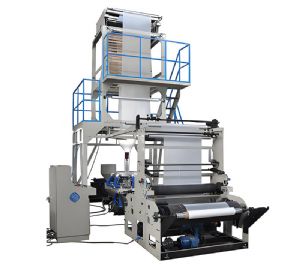
Blown Film Machine
Key EU directives: Machinery Directive 2006/42/EC: safety requirements. Low Voltage Directive 2014/35/EU: electrical safety. EMC Directive 2014/30/EU: electromagnetic compatibility. Harmonized standards: EN ISO 12100 (risk assessment), EN 60204-1 (electrical). ISO certifications: ISO 9001: Quality Management Systems. ISO 14001: Environmental Management. ISO 50001: Energy Management (optional). Verification steps: Request Declaration of Conformity. Check certificate expiry and certifying body. Review scope of ISO certification. Consider on-site audit for critical projects. In practice, the buyer should include certification requirements in the purchase contract. In conclusion, advanced CE and ISO certification compliance ensures safety, quality, and regulatory acceptance.
