Advanced Bubble Formation and Air Cushioning Mechanics in Bubble Film Machines 2026
A bubble film machine is a specialized variant of blown film equipment that produces air-filled cushioning film, commonly known as bubble wrap. Unlike standard flat film, bubble film consists of two layers: a base film and a profiled film with hemispherical cavities that trap air. The formation of these bubbles is achieved through a combination of extrusion, embossing, and lamination. The process starts with two separate melt streams – one for the base film and one for the bubble layer – extruded through a flat die or two circular dies, depending on the machine design. The bubble layer is formed by passing the molten film over a vacuum drum that has a pattern of cavities (hemispherical molds). The vacuum draws the film into the cavities, creating the bubble shape. At the same time, the base film is laminated onto the profiled film via a nip roll, trapping air within the cavities. The pressure and vacuum settings are critical: too much vacuum can puncture the film; too little results in shallow bubbles. The temperature of the film at the forming station must be carefully controlled – if too hot, the film may melt into the cavities; if too cold, it won't conform. The machine typically uses LDPE or LLDPE with high melt strength to maintain bubble integrity. The bubble dimensions (diameter and height) are determined by the cavity size and the vacuum level. Common bubble sizes range from 5 mm to 25 mm in diameter, with heights from 3 mm to 10 mm. The film thickness is typically 30-100 µm for the base and bubble layers. The line speed is moderate (20-60 m/min) because the forming process requires sufficient dwell time. In summary, the bubble film machine is a precision forming device that relies on vacuum embossing and lamination to create a three-dimensional air cushion structure. The process requires precise control of temperature, vacuum, and nip pressure to achieve consistent bubble size and air retention.
The mechanics of air retention in bubble film are crucial for its cushioning performance. The air trapped inside each bubble acts as a shock absorber; the amount of air and the film's elasticity determine the cushioning efficiency. The bubble film machine must ensure that the bubbles are sealed airtight. The lamination process must achieve a perfect seal between the bubble layer and the base film; any leak will cause the bubble to deflate. The seal integrity is influenced by the nip roll pressure, the temperature of both layers, and the resin's sealability. Some machines use an adhesive layer or a tie layer to enhance bonding. The bubble film can be produced in single bubble (one layer of bubbles) or double bubble (two layers laminated together) for extra protection. The double bubble process requires two forming stations and an additional lamination step. The machine also includes a cooling section after lamination to set the bubbles. The film is then wound onto rolls, often with a perforator to allow easy tear-off. The quality of bubble film is assessed by the bubble retention rate (percentage of bubbles that remain inflated after 24 hours), the cushioning performance (drop test), and the film's tensile strength. In summary, the bubble film machine is a complex forming system that requires careful optimization of process parameters to produce reliable cushioning film. The trend toward sustainable packaging has led to the development of biodegradable bubble films using PLA or PBAT, which require modified processing conditions (lower temperatures, higher melt strength). In conclusion, the bubble film machine is a niche but essential equipment for the packaging industry, providing superior protection for fragile items. Its operation is a blend of extrusion, thermoforming, and lamination, making it a specialized area of blown film technology.
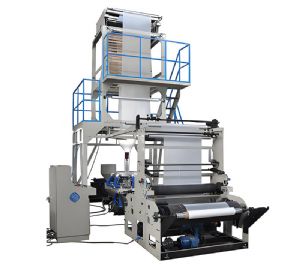
Blown Film Machine
Key process parameters: Vacuum level (typically 50-80 kPa) – higher vacuum improves bubble formation but risks puncture. Drum temperature (controlled by water circulation) – set to keep the film at its forming temperature (90-110°C for LDPE). Nip roll pressure (2-4 bar) – ensures proper sealing without crushing bubbles. Line speed – must be balanced with forming time; higher speed reduces dwell time and may lead to incomplete bubble formation. Chill roll temperature – cools the film after lamination. The machine's die design – flat die with a slot gap, or circular die with a special profile. The embossing drum pattern determines the bubble size and arrangement; it is typically made of nickel or stainless steel with a hard chrome coating for durability. The vacuum system must have a capacity to maintain consistent vacuum despite fluctuations in film thickness. The machine often includes a vision inspection system to detect burst or misshapen bubbles. In conclusion, the bubble film machine is a specialized process that requires a deep understanding of thermoforming and lamination. Operators must monitor bubble appearance and air retention regularly, adjusting parameters to maintain quality. With the rise of e-commerce, the demand for bubble film machines continues to grow, and innovations in biodegradable materials are opening new opportunities.
