Advanced Barrel Wear and Its Interaction with Screw Wear: Combined Effect on Output and Quality 2026
While screw wear is commonly addressed, barrel wear is equally important and often overlooked. The barrel inner wall also experiences abrasion, especially in the feed and compression zones, where the solids convey and melt. Barrel wear increases the clearance in conjunction with screw wear, exacerbating backflow and output loss. The combined clearance (screw flight tip to barrel wall) is the sum of the wear on both components. When the barrel is worn, it may become oval or tapered, making it difficult to achieve a uniform clearance even with a new screw. Barrel wear can be measured by pulling the screw and using a bore micrometer to check the barrel inner diameter at multiple points. If the barrel is worn beyond acceptable limits (typically >0.2 mm oversize), it can be honed to a larger diameter and fitted with a larger screw, or it can be sleeved (replacing the worn section with a new liner). Sleeving involves removing the worn barrel material and inserting a new hardened liner, restoring the original bore. In summary, barrel wear must be monitored alongside screw wear. The combined clearance is what matters; if the barrel is worn, reconditioning the screw alone may not restore performance.
The interaction between screw and barrel wear is complex. As the barrel wears, the screw may begin to rub against the barrel, causing further wear. The wear debris can accelerate the process. To manage combined wear, regular measurement of both components is recommended. When the combined clearance exceeds the acceptable limit, both components should be addressed: recondition the screw and either hone or sleeve the barrel. The cost of sleeving is significant, but it extends the extruder's life. In practice, many converters choose to replace the barrel and screw together when wear is severe. However, for cost reasons, some may recondition the screw and hone the barrel to a slightly larger diameter, then use a new screw with larger flight diameter. This requires custom manufacturing. In conclusion, barrel wear is a critical factor in extruder performance. Combined wear management, including regular measurement and appropriate corrective actions (sleeving, honing, or replacement), ensures that the extruder maintains its output and melt quality over its service life.
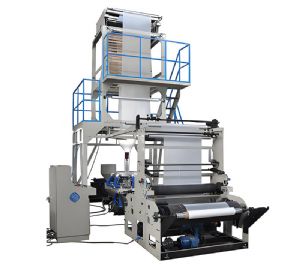
Blown Film Machine
Barrel wear measurement: Use bore micrometer to measure inner diameter at feed, compression, and metering zones. Check for ovality (difference between horizontal and vertical diameters). Compare to original barrel specifications. Acceptable wear: typically <0.2 mm oversize. Corrective actions: Honing: enlarging the bore slightly to restore roundness; requires a larger screw. Sleeving: removing worn section and inserting a new hardened liner (costly but effective). Replacement: new barrel (most expensive). Combined clearance management: Measure screw flight diameter and barrel bore diameter. Calculate clearance = bore - flight diameter. For 120 mm screw, clearance should be 0.3-0.5 mm for new; >1.0 mm indicates wear. If barrel is worn, honing or sleeving is needed. Cost comparison: Screw reconditioning: $5k-$15k. Barrel sleeving: $10k-$25k. New barrel: $20k-$50k. Combined replacement: $30k-$70k. In practice, the decision depends on the remaining life of the machine and the budget. Regular inspection of the barrel with a borescope can detect scoring or galling. In conclusion, managing combined screw and barrel wear is essential for maintaining extruder performance; a holistic approach ensures cost-effective operation and consistent melt quality.
