Advanced Automatic Frost Line Height Control: Vision Systems and Predictive Algorithms 2026
Manual FLH adjustment is subjective and requires constant operator attention. Automatic FLH control systems use a vision system (camera) to detect the frost line position and a control algorithm to adjust cooling air flow (blower speed and/or IBC flow) to maintain the setpoint. The camera captures the bubble image; image processing software identifies the transition from glossy (melt) to matte (solid) and calculates the height. The height signal is sent to a PID or model predictive controller that compares it to the setpoint and adjusts the blower speed or IBC flow. The control loop must account for the delay between cooling adjustment and FLH change (typically 10-30 seconds). The system can also include feedforward from line speed and output to anticipate FLH changes. The vision system must be calibrated and protected from dust and heat. In summary, automatic FLH control provides consistent FLH, reduces operator workload, and enables higher speeds by maintaining optimal cooling. The investment is justified for high-speed or multi-product lines. The operator can monitor the system and override if needed.
Predictive algorithms can further enhance performance. By modeling the heat transfer dynamics, the system can predict the effect of changes in line speed or output on FLH and pre-adjust cooling, reducing the error. This is a form of model predictive control (MPC). The model parameters (time constants, gains) are identified from step tests. The MPC can also handle constraints (e.g., maximum blower speed). In practice, the automatic FLH control system is integrated with the line's PLC, and the setpoint is stored in the recipe. The operator should periodically check the system's performance by comparing the measured FLH with the setpoint. If there is a persistent offset, the control gain may need adjustment. In conclusion, automatic FLH control with vision and predictive algorithms is a key technology for advanced blown film lines, ensuring consistent cooling and enabling higher productivity.
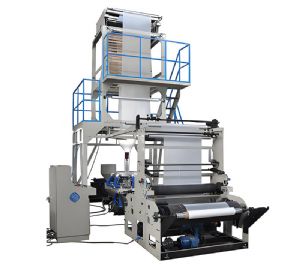
Blown Film Machine
System components: Camera: CCD or CMOS, with lens and filters. Image processing: software to detect frost line. Controller: PLC or industrial PC with PID or MPC. Actuators: blower VFD, IBC valve. Interface: HMI for setpoint and monitoring. Calibration: Set camera position and scale. Define frost line detection threshold. Test with known FLH. Tuning: PID gain: based on response time. MPC: model time constant (20-30 s). Feedforward gain: from line speed. Setpoint: stored in recipe. Maintenance: Clean camera lens regularly. Check for dust on bubble. Calibrate annually. Benefits: Consistent FLH (±5 mm). Reduced operator workload. Higher speeds and output. Improved film quality. In practice, the system should have a manual override and alarm for camera failure. In conclusion, automatic FLH control is a valuable upgrade for blown film lines, providing consistent process control and enabling operators to focus on other tasks while maintaining optimal film properties.
