Advanced Anti-Fog and Slip Additive Technology for Food Wrapping Films 2026
Anti-fog additives are used in food packaging films to prevent condensation droplets from forming on the film's surface, which can obscure product visibility and promote bacterial growth. These additives are typically surfactants (e.g., fatty acid esters, polyglycerol esters) that migrate to the surface and reduce the surface tension, allowing water to spread into a thin, transparent layer instead of droplets. The migration rate must be controlled to provide anti-fog effect over the product's shelf life. The additives are added to the inner layer (or the entire film) at 1-5%. Their migration is temperature-dependent; higher temperatures accelerate migration. The extrusion process must ensure uniform dispersion; the screw should have a mixing section. The die temperature must be uniform to prevent premature migration. The film's anti-fog performance is tested by exposing it to steam and measuring the droplet formation. Slip additives (e.g., fatty acid amides) reduce friction between film layers and processing equipment, improving handling. However, slip agents can reduce seal strength and interfere with anti-fog; the selection must be balanced. In summary, anti-fog and slip additives are critical for food packaging films, but their migration must be carefully controlled to achieve the desired performance without compromising seal integrity or compliance. The operator must monitor additive feed rates and adjust based on film properties.
The migration of these additives must be within regulatory limits for food contact. The additives must be approved for food contact (e.g., FDA-listed). The migration is tested using food simulants (e.g., ethanol, olive oil) per FDA or EU protocols. The line's process parameters (temperature, residence time) affect additive degradation; excessive heat can break down surfactants, reducing their effectiveness and generating non-compliant compounds. The film's storage conditions also affect migration; the anti-fog effect may develop over time. In practice, the film is often tested for anti-fog after a specified storage period. The operator must adjust the additive feed rate if the anti-fog effect is insufficient or too strong (causing tackiness). The use of high-quality masterbatches with good dispersion is essential. In conclusion, anti-fog and slip additive technology is a delicate balance of performance, migration, and compliance. The food-grade packaging film line must be equipped to process these additives precisely, and the operator must monitor the film's surface properties and regulatory compliance regularly.
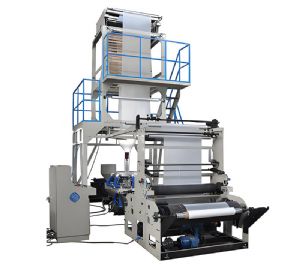
Blown Film Machine
Key additives: – Anti-fog: fatty acid esters, polyglycerol esters (inner layer, 1-5%). – Slip: erucamide, oleamide (0.05-0.2%). – Anti-block: silica, talc (0.1-0.5%). Processing: – Feed rate: gravimetric for accuracy. – Melt temperature: within additive stable range (typically <220°C). – Mixing: screw with mixing section. – Die temperature: uniform to avoid premature migration. – Storage: film properties may develop over time. Quality tests: – Anti-fog: steam test, evaluate droplet spread. – Slip: coefficient of friction. – Migration: per FDA/EU simulants. – Seal strength: ensure additives don't reduce seal. In practice, the operator should adjust additive rates based on feedback from quality tests. Regular calibration of feeders is essential. In conclusion, advanced additive technology is vital for food-grade films, providing the necessary surface properties while ensuring food safety and compliance.
