Advanced Air Ring and Die Lip Cleaning Procedure: Tools, Techniques, and Frequency 2026
Cleaning the air ring and die lip is a critical maintenance task to prevent die lines, gauge bands, and bubble instability. The air ring, which delivers cooling air, accumulates dust, polymer residue, and degraded material on its lips and vanes, disrupting airflow uniformity. The die lip, where the melt exits, accumulates carbonized polymer deposits (often from degradation) that cause longitudinal streaks (die lines). The cleaning procedure must be performed regularly; frequency depends on the resin type and line usage. For clean resins (LDPE, LLDPE), air ring cleaning is recommended daily (wipe down) and die lip cleaning weekly. For abrasive or filled resins, cleaning intervals may be shorter. The tools required: brass scrapers (never steel, to avoid scratching), copper wire brushes, lint-free cotton cloths, heat-safe solvent (e.g., purging compound or commercial cleaner), compressed air, and personal protective equipment (heat-resistant gloves, face shield). The line must be shut down and locked out for die lip cleaning; for air ring cleaning, the line can be running at low speed, but caution is needed. In summary, a systematic cleaning procedure with the right tools ensures effective removal of deposits without damaging the precision surfaces.
For the air ring: 1) Turn off blower and allow the air ring to cool to a safe handling temperature (50-70°C). 2) Remove the air ring cover or upper lip section (if detachable). 3) Use a brass scraper to gently remove polymer deposits from the lip surfaces and vane areas. 4) Use a copper brush and heat-safe solvent to wipe the surfaces; then wipe dry with a lint-free cloth. 5) Clean the air supply slots and holes with compressed air and a small brush. 6) Reassemble the air ring, ensuring it is level and centered. 7) Check airflow pattern with a smoke stick to confirm even distribution. For the die lip: 1) The die is at operating temperature (180-240°C); wear heat-resistant gloves and face shield. 2) Purge the extruder with a cleaning compound to push out degraded material. 3) Use a brass scraper to carefully scrape the die lip (inner and outer) from the center outward, removing deposits. 4) Use a copper wire brush for stubborn deposits. 5) Wipe the lip with a cloth soaked in heat-safe solvent; be careful not to drip solvent onto the hot melt. 6) For thorough cleaning, the die lip sections may be removed (major maintenance). 7) Inspect the lip for scratches; if present, polish with fine emery paper (600 grit) in the direction of melt flow. 8) Reassemble and set the die gap to the initial setting. 9) Purge with resin until the film is clean. In practice, the operator should record each cleaning date and any observations. The use of a purging compound between resin changes reduces deposit buildup. In conclusion, regular, careful cleaning of the air ring and die lip is essential for maintaining film quality and process stability. Following a standardized procedure with proper tools ensures thorough cleaning without damaging the equipment.
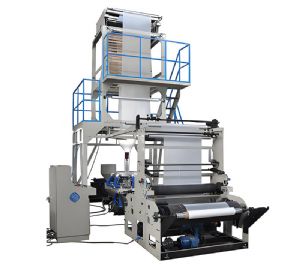
Blown Film Machine
Recommended tools: Brass scrapers (various sizes). Copper wire brushes. Lint-free cotton cloths. Heat-safe solvent (compatible with polymer). Compressed air line with nozzle. Smoke stick for airflow test. Pyrometer for die temperature check. Personal protective equipment: heat-resistant gloves, face shield, safety glasses. Cleaning frequency: Air ring: daily wipe down, weekly deep clean. Die lip: weekly for clean resins, more often for filled/recycled. Full die disassembly: annually or as needed. Steps for die lip cleaning (detailed): 1) Reduce line speed to minimum. 2) Purge with cleaning compound (e.g., purging resin) for 5-10 minutes. 3) Scrape outer lip with brass scraper, moving from center to edge. 4) Scrape inner lip similarly (use a specialized scraper). 5) Use copper brush on stubborn deposits. 6) Wipe with solvent-soaked cloth; repeat until clean. 7) If die has removable lip sections, remove and clean in solvent bath. 8) Inspect for scratches; polish if needed. 9) Reinstall and adjust gap. 10) Purge with production resin until film is free of cleaning compound. Safety precautions: Always lock out/tag out before any disassembly. Never use steel tools that can scratch surfaces. Avoid excessive force that could deform the lip. Use solvent in a well-ventilated area. Be aware of hot surfaces; use insulated tools. In practice, the operator should also clean the die lip whenever a change in gauge profile is observed. In conclusion, a disciplined cleaning regimen is a low-cost, high-impact practice that prevents many quality issues and extends die life.
