Advanced Air Ring Cleaning and Maintenance for Consistent Cooling Performance 2026
The air ring, being exposed to the bubble's environment, accumulates dust, polymer deposits, and degraded material on its lips and vanes over time. These deposits disrupt the airflow pattern, causing asymmetric cooling, gauge bands, and bubble instability. Regular cleaning is essential to maintain cooling performance. The cleaning frequency depends on the resin type and line usage: for clean resins (LDPE, LLDPE), a weekly cleaning is recommended; for filled or recycled resins, more frequent cleaning (daily or every shift) may be needed. The cleaning procedure: turn off the blower, allow the air ring to cool to a safe temperature, remove the cover or upper lip section, use a brass scraper to gently remove deposits (never steel to avoid scratching), use a copper brush and heat-safe solvent to wipe the surfaces, and blow out the air supply slots with compressed air. After reassembly, check the airflow pattern with a smoke test to ensure uniformity. In summary, a systematic cleaning procedure with the right tools ensures that the air ring delivers uniform cooling. The operator should document the cleaning schedule and any observations (e.g., heavy deposits). In conclusion, regular air ring maintenance is a low-cost, high-impact practice that prevents many quality issues and extends the life of the air ring.
In addition to cleaning, the air ring should be inspected for damage (dents, corrosion) and wear. The vanes should move freely and be adjusted to the correct angle. The blower's filter should be cleaned or replaced regularly to ensure adequate airflow. The air ring's centering should be checked periodically; any shift requires realignment. In practice, the operator should also check the air ring's pressure drop; an increase indicates a blockage or a filter issue. In conclusion, advanced air ring maintenance, including cleaning, inspection, and alignment, ensures consistent cooling performance and contributes to stable, high-quality film production.
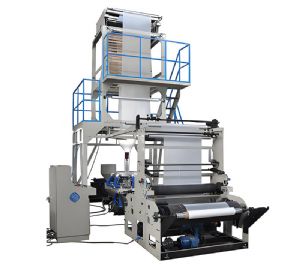
Blown Film Machine
Cleaning procedure: 1) Turn off blower; allow cooling. 2) Remove cover or lip section. 3) Use brass scraper to remove deposits. 4) Wipe with solvent and cloth. 5) Clean slots with compressed air. 6) Reassemble and center. 7) Perform smoke test. Maintenance schedule: Weekly: cleaning for clean resins. Daily: wipe down for filled resins. Monthly: inspect vanes and alignment. Quarterly: replace blower filter. Annually: professional inspection. Tools: Brass scrapers, copper brushes, lint-free cloths, heat-safe solvent, compressed air. In practice, the operator should also check for any damage to the air ring lips; even small nicks disrupt airflow. In conclusion, advanced air ring cleaning and maintenance are essential for consistent cooling performance, reducing gauge variation and improving film quality.
